Trump’s Pronatalist Policy for GDP Growth
by Kirsten Stade
At this point in his second term, it is clear that President Trump represents an unmitigated disaster for the steady state. His deregulatory onslaught is removing barriers to growth throughout the economy. The consequences for human health, the environment, and democratic participation are untold and mounting.

Trump’s attacks on reproductive rights have been a consistent feature of his presidency. (Mark Dixon, CC by 2.0)
His foreign policy, energy policy, and food policy are similarly crafted for growth—of the most unsavory and polluting industries.
Trump’s unflagging commitment to growth also manifests in his approach toward population and reproductive health. He has aligned himself with those who wish to roll back decades of progress in gender equality, contraceptive access, and the lowered birth rates that result. This has meant, at home and abroad, aggressive pronatalist policy to stifle reproductive choice and promote childbearing.
Rolling Back Reproductive Rights at Home
Since 1970, Title X has been the only federal program dedicated solely to improving access to contraception. The federal grant program has provided nearly $300 million annually for free and low-cost family planning services. This care has prevented more than 800,000 unintended pregnancies every year.
These funds were never used to perform abortion. But Title X program services included counseling and referrals for the full range of reproductive options, until Trump’s 2019 gag order prohibited the mere mention of abortion. More than 181,000 unintended pregnancies likely resulted, and many providers left the program before Biden reversed the gag order.
In Trump’s second term, his administration has gone to even greater pronatalist extremes.
Trump’s Department of Health and Human Services (HHS) issued funding guidance that turns Title X’s mission on its head. It mentions contraception only once, to point out its side effects and declining use. Instead, it notes that priorities of “healthy pregnancies and family formation” will guide its grantmaking.

The Trump Administration’s new Moms.gov website.
But the Trump administration is not content with merely removing contraceptive access. Trump has launched a website that promotes “crisis pregnancy centers,” fake abortion clinics staffed by anti-choice volunteers.
He has canceled millions of dollars in teen pregnancy prevention grants. New guidelines require applicants to promote abstinence, and focus more on planning for pregnancy than preventing it.
Yes, even for teens.
Calling himself the “father of fertility,” Trump has proposed a rule that expands access to IVF. The rule does not mention that these treatments are seldom successful and come at great emotional, physical, as well as financial cost to those who endure them.
Attacking Reproductive Rights Abroad
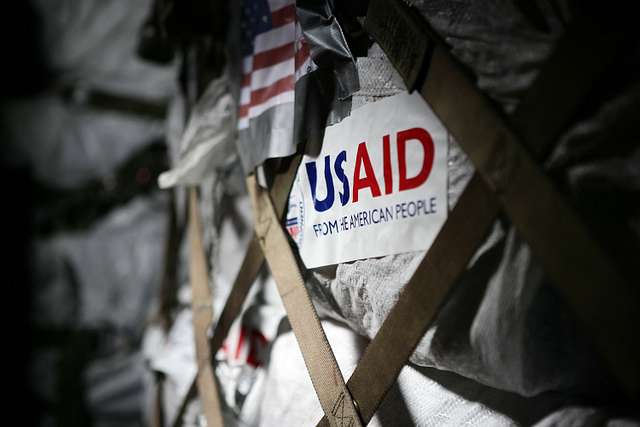
The loss of USAID has led to millions of unintended pregnancies, as well as hundreds of thousands of deaths from poverty, disease, and malnutrition. (U.S. Navy)
In keeping with the tradition of every Republican president since 1984, Trump has reinstated the Global Gag Rule. Previous versions applied only to programs funded through family planning and reproductive-health assistance from the U.S. Agency for International Development (USAID). They prohibited these programs from performing, or even offering information on, abortion.
Trump’s 2017 version of the rule was expanded to cover all global health aid distributed through any U.S. government agency or department. A 2026 update goes even further. As of January 2026, the rule applies to all non-military U.S. foreign-health, development, and humanitarian assistance. Impacted recipients now include not just international NGOs, but domestic NGOs, international organizations like the UN, and foreign governments.
These cuts come on top of the administration’s dismantling of the entire U.S. foreign aid apparatus. Elon Musk’s short-lived stint in the Trump administration had long-term consequences, with his “Department of Government Efficiency’s” elimination of USAID. This move slashed tens of billions of dollars of aid to address poverty and disease across the world.
This included millions of dollars of family planning and contraceptive aid. The loss of this aid likely resulted in over 17 million unintended pregnancies in 2025 alone.
What has become of that aid belies any notion that the cuts were in service of “government efficiency.” Nearly ten million dollars in contraceptives still languish in a storehouse in Belgium. These now-expired supplies could have provided pregnancy prevention to nearly a million people. NGOs have offered to purchase and distribute these supplies, but the administration instead is opting to store them at a cost of $460,000.
This sum could have provided contraception to nearly 44,000 women and couples and prevented 15,700 unintended pregnancies and 4,800 abortions.
USAID worked alongside the United Nations Population Fund (UNFPA) to provide family planning services in more than 150 countries and territories. But Trump has cut off UNFPA funding as well, citing a 40-year-old provision that prohibits U.S. funding for “coercive abortion or involuntary sterilization.” There is no credible evidence that UNFPA has been involved in either.
Baby Bust Alarmism in Service of GDP
This hostility to contraception is rooted in several trends on the political right. Conventional conservatives like J.D. Vance extol traditional gender roles and the high birth rates associated with them. Meanwhile tech eugenicists like Elon Musk encourage “elites” to procreate, in hopes of improving the “genetic quality” of future generations. For these administration officials, economic considerations are not the driving force of their pronatalism.

Elon Musk, father of fourteen, has said that the “collapsing birth rate is the biggest danger civilization faces by far.” (Marco Verch, CC-BY-NC 2.0)
But for some who call the declining U.S. fertility rate a “crisis,” economic concerns are front and center. Media outlets lament a shrinking labor force and imperiled social security as governments weigh baby bonuses to forestall such outcomes.
Such policy puts anachronistic pressures on women to increase reproduction, and sidelines their agency in one of the most important decisions of their lives.
And it does so in unabashed service of GDP.
In a particularly glaring example, the attorneys general of Kansas, Missouri, and Ohio have sued the federal government to ban mifepristone for minors. They argue that remote dispensing of the abortion drug is “depressing expected birth rates for teenaged mothers.” The consequent “loss of potential population,” they say, causes “injuries” such as the states’ “diminishment of political representation” and “loss of federal funds.” Injuries, in short, that may deprive the state of hoped-for economic growth.
Wherever Women Have Access to Contraceptives
The sinister objectives behind efforts to enforce childbirth are seldom so thinly veiled. But pronatalist pressures, whether pressures from a partner for heirs, from a political leader for more taxpayers, or from business leaders for cheap labor, are everywhere. And they skew reproductive decision-making toward childbirth.
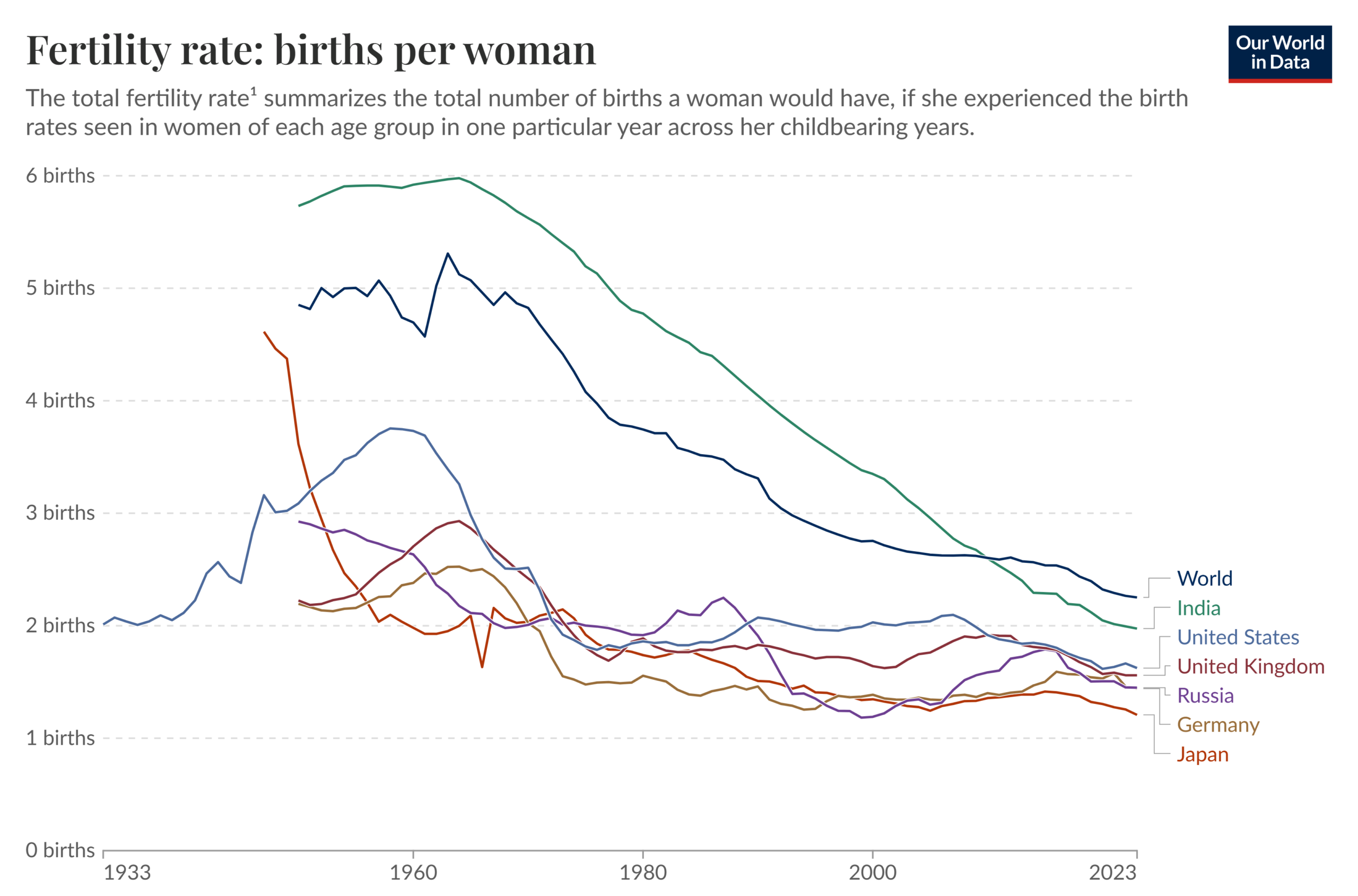
Global fertility has declined by more than half since the 1960s, due to family planning programs that provide contraception while empowering women and girls. (Our World in Data, CC by 4.0)
Yet their power is diminishing as women and girls gain access to education, employment, and modern contraception. More than half the countries around the world have birth rates below 2.1 children per couple. That figure includes rich countries and poor, deeply religious and largely secular. Below-replacement fertility is slated to eventually shrink populations toward sustainable levels more congruent with national security and international stability.
In fact, wherever women have access to contraceptives and empowerment to use them, they do exactly that. The trend is so well-established that researchers posit a “latent desire” among women of all cultures, throughout much of history, to have fewer children.
This is great news for a steady-state transition.
Demographic transition theory has long dimmed hopes for a steady state. This theory holds that birth rates decline only following substantial increases in GDP/capita. So the smaller global human population necessary for planetary systems to flourish, it was thought, could only come with per capita income levels that would threaten that flourishing.
Recent research contradicts this theory. Fertility decline in many developing countries, it turns out, has followed the availability of modern contraception and has little correlation with economic development.
Foreign Aid, Fertility, and Immigration
International aid focused on voluntary family planning programs could be among the most important tools for wealthy countries to advance a global steady state. Yet the United States has been reluctant to wield this tool. Although still the largest international family planning donor when Trump took office in 2025, the United States had slashed this funding long before Trump’s presidency.
And the international community has not stepped in to fill the void. Since the mid-1990s, UNFPA has neglected its family planning mandate.
Frank Götmark, Professor emeritus of Animal Ecology and Conservation Biology at the University of Gothenburg, spoke with the Herald about this trend. Götmark explained how starting in the 1960s, robust international family planning programs not only provided modern contraception in developing countries. They also taught women and girls about the health and economic benefits of limiting their fertility. These educational programs shifted women’s preferences from high fertility to low, empowering them to overcome pronatalist pressures from family members and the patriarchal cultures they lived in.
This norm shifting was key to the success of the programs that led to drastic global fertility reductions between 1960 and 1994.
Since the mid-1990s, however, the focus of UNFPA has moved on from such programs. They are still a major distributor of contraception across the world. However, UNFPA downplays this role in favor of the far more nebulous focus of “sexual and reproductive health and rights.”
The consequences are stark. To this day 215 million women have an unmet need for modern contraception, giving rise to 22 million unplanned pregnancies per year. “Millions of women…face pronatalist forms of coercion, such as being forced to give birth to unwanted children, in the absence of contraceptive services,” says Götmark. Meeting this need would slash the numbers of unintended pregnancies by almost 75 percent. The refusal to do so contributes to the staggering current human population of eight billion, and continued growth of 70 million people per year.
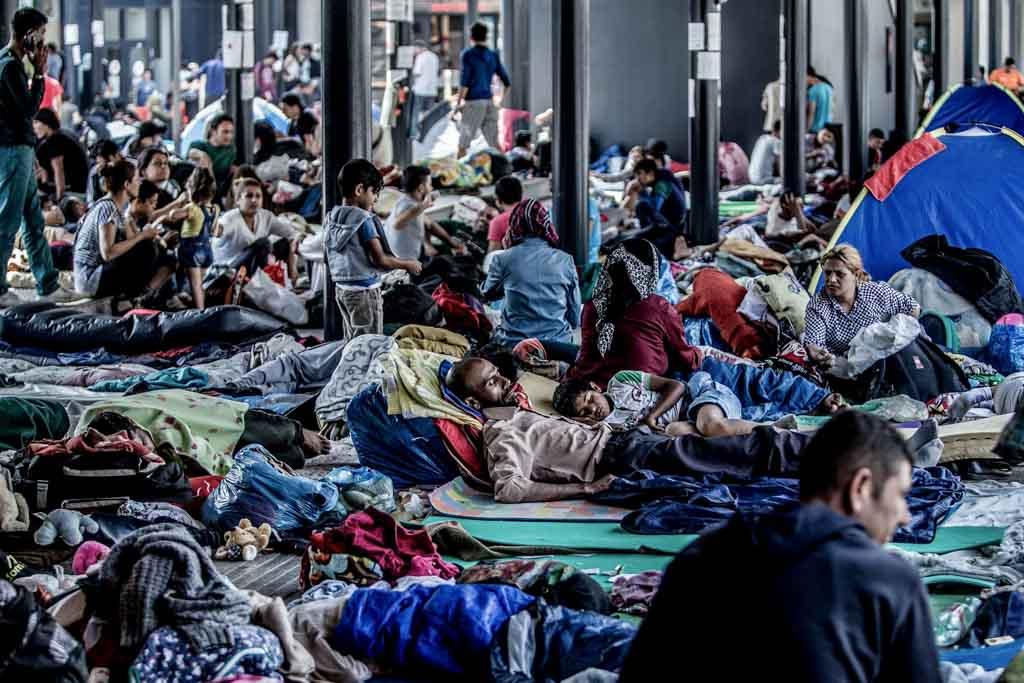
The millions of unplanned pregnancies from Trump’s cuts to family planning programs will add to the unemployment and overcrowding that drive immigration. (Sandor Csudai)
This growth is largely due to lack of access to contraception and stagnant progress in gender equality in sub-Saharan Africa and the Middle East. International family planning assistance would begin to correct these imbalances. It would also address climate change, biodiversity collapse, and other manifestations of ecological overshoot arising from overpopulation.
Countries with continued high fertility are also those that will suffer the most from climate change and deepening resource conflict. These conditions will drive many members of their growing populations to emigrate.
To the limited extent that Donald Trump appeals to steady staters, that appeal likely resides in his stance on immigration. CASSE’s position, outlined in the Sustainable Population and Immigration Act (SPIA), accepts some immigration restrictions as consistent with a steady state.
But key to SPIA is that borders are tightened only after the United States embraces the steady state as a policy goal. Even then, SPIA envisions some level of migration to counteract declining birth rates: “…immigration levels, that, considering fertility, mortality, and emigration rates, result in a stabilized U.S. population.”
This vision of “steady-state net migration” articulated by Brian Czech is about as far from current immigration policy as one could imagine. As Czech notes, “Morally decrepit population management is not only wrong in a normative sense; it won’t stand a test of time, either.”
While Trump implements a draconian, reckless anti-immigration policy, he also pulls out all the stops to grow GDP and GDP per capita. Trump’s tightening of borders is consistent with neither human rights nor a steady state.
U.S. policy abroad, from the abandonment of family planning to the funding of genocide and the initiation of war, has led to the immiseration of millions. For future administrations that seek to correct these abuses—and to move prudently toward a steady state economy—full restoration of family-planning aid would be a good place to start.
 Kirsten Stade is a staff writer at CASSE.








Nice article
Thanks for keeping this going!
We will get there one day
One way or the other!
Best wishes
This US administration is pretty weird, and obsession with births is yet another bit of weirdness. For what it’s worth I don’t think the birth boosterism will work, far from it. As I recall Romania in the Cold War did something similar, hoping to basically spawn more cannon fodder.
It backfired spectacularly, because ultimately things depend on decisions made by individuals, who take the measure of the world around them. In Romania’s case, things were bleak enough that young men and women did everything possible to avoid pregnancy, and the Romanian birth rate plummeted.
I could be wrong but I think we’ll see something similar in the US. Again, due to bleak prospects for young people. American conservatives were fond for a long time of the jibe, “if you can’t feed ’em, don’t breed ’em.” And young people in the US today are saying … OK.
Absolutely, Cole – and that’s a great point. Young people are for sure avoiding procreation in part because they see a world they feel is unfit to bring new humans into. And they just can’t afford it.
But that doesn’t explain why birth rates have also been plummeting in countries with some of the strongest social safety nets, where people consistently score high on indices of happiness and well-being. Finland, Denmark, and Iceland scored highest on the World Happiness Index in 2025. That year, Finland’s birth rate was 1.3 children/couple, Denmark’s was 1.77, and Iceland’s was 1.7.
The “latent desire” that women have for few children is expressed through fertility declines that occur consistently whenever women have access to contraception and are empowered to use it. It is such a powerful concept because it transcends time, culture, and economic circumstances. I encourage everyone to dig deeper into the linked source on this, an amazing paper by Martha Campbell and Kathleen Bedford. We have labored under the Demographic Transition theory long enough!
Great start, Kealan.
Good points, Cole.
Impressive and helpful article, Kirsten!
Here are three areas of gentle pushback from the steady-state right, where I spend about half of my mental time as an independent swing voter in upstate New York :)
1. Top line, I believe we have a mandate from our Creator to provide planet-wide access to steady-state sex ed, contraception and abortion. This said, Roe v. Wade seems draconian to me and to much of the faith-based world. I don’t see a need for elective abortion beyond the first trimester. Nor is it clear to me (yet) why American taxpayers should fund any of these services (education, contraception, abortion) for other UN Member states, especially under an extremist Roe v. Wade standard.
2. While each can be positive, anti-natalism and pronatalism can both be coercive, from pressure in intimate relationships to state-level policies, and both women and men can be responsible for the coercion. I “decided” early in life not to have children for closely interrelated religious and environmental reasons. Then in my forties, I had to deal with stinging biological regret at the end of my genetic line. Had I really made an informed choice not to have children, or was I coerced by a reproductively unjust post-1945 UN framework that had allowed so much overshoot and income inequality into the world it left “privileged” (however poor) US white men like me no ethical alternative? Now I am at peace with my choice, but I remain sensitized to the nuances involved in a truly non-coercive steady-state reproductive ethic.
3. Immigration under Biden was reckless. Google AI is firm: “From a biophysical and thermodynamic perspective, decreasing US GDP per capita and stabilizing US population is structurally more essential to civilizational survival than maximizing climate refugee absorption.” Holding at 345M looks like our most precautionary way to proceed through 2040 while we get a steady-state transition plan up and running.
Thank you for your thoughtful pushback, Jonathan!
I so appreciate your call for universal access to contraception, abortion, and comprehensive sex ed, and there is room for disagreement on the scope of those services. For now I think a goal we can all agree upon would be to eliminate the 121 million global unplanned pregnancies because we have so universalized the availability of those services. Of course, programs that make contraception widely available, while empowering women and girls to use them, will minimize abortion as well as births.
Reproductive coercion from any direction has no place in a progressive or steady state world. You raise an incredibly important point – that many folks like yourself might otherwise have chosen conscientiously to raise children, if you were not coerced by the realities of a world in overshoot to do otherwise. Yet antinatalist reproductive coercion gets a fair amount of attention in mainstream discourse. Discussions of population, and the climate change and biodiversity impacts of our growing numbers, are silenced with references to China and India’s coercive sterilization programs. These programs were grievous violations of human rights, but accounted for a tiny minority of international family planning programs historically. The vast majority were voluntary and right-based. I am hoping to underscore the vastly greater prevalence of reproductive coercion in the pronatalist direction, which has gotten far less attention.
On immigration, I would say that one silver lining is that upon entering the US immigrant women will in many cases have greater access to contraception, and greater opportunity to insist upon its use.
Brilliant follow-up, Kirsten! You should be our shadow Secretary of State :)
Actually, before I vote to confirm you, allow me a question. I must share with you that I am a “two-state, one homeland” eco-Zionist who has followed the tragedy in Gaza quite closely from an international legal perspective, and I think it is telling that even ICC Chief Prosecutor Khan (now discharged from his duties for sexual harassment and gaslighting, of all things) did not charge any Israelis for genocide because he didn’t have enough evidence to do so. These are highly complex and contested allegations that steady-staters of good will can have different views about (at least until we get a final ruling from the ICJ). Also, Secretary of State Rubio would certainly argue that genocidal Islamist nuclear terrorists in Iran, backed by China and Russia, left Trump with no choice but to intervene. Rubio would further likely say that the Pax Americana has brought enormous prosperity to our planet of 8 billion people, that the recent suffering of millions is a consequence of CRINK misbehavior – not GOP warmongering – and that we must be very careful not sell America short on the world stage relative to the competition. Indeed, if we want to appeal to future steady-staters on the right as well as the left, we probably want to carefully avoid giving the impression that CASSE champions are a Trojan Horse for anti-American pronatalists in Beijing and Moscow. You didn’t mention it in your article, but authoritarian pronatalist patriarchy is still more of a problem on the other side of the geopolitical equation, right? Or would you call that xenophobia?
We can totally agree on the need to eliminate unplanned pregnancies! Please say more about the 121M figure. I see in your article that we are adding 70M new people a year, and that 20M of those are unintended, which is massive, but I am missing your reference to the 121M. Is all of our net global population growth unintended?
Thanks again :)
Depending on the source, the annual global numbers of births is 130-140 million and deaths is about 60 million (net increase of 70-80 million). For some time, it has taken around 12 years to add (net) one billion people. 4 billion was reached around 1975; 5 billion in 1987; 6 billion in 1999; 7 billion in 2011; and 8 billion in late 2022. An incredibly consistent absolute increase, but a declining percentage increase. The UN has been adjusting its estimate of the peak population upwards for decades.
Global population reached one billion in early 19th century; 2 billion in 1927; and 3 billion in 1960. It is frightening to think that, since the year of my birth (1964, 3.25 billion), the global population has increased by 5 billion (currently 8.25 billion). A ridiculous increase in such a short space of time.
Ecologically, human population growth is the African bull elephant in the room, as Paul Ehrlich effectively pointed out in 1968 with his book, “The Population Bomb”. A disaster in the making.
Hi Jonathan, the 121 million figure is from UNFPA: “Nearly half of all pregnancies, totaling 121 million each year throughout the world, are unintended.” Roughly 60% of these end in abortion. https://www.unfpa.org/press/nearly-half-all-pregnancies-are-unintended%E2%80%94-global-crisis-says-new-unfpa-report.
The 22 million refers specifically to unplanned pregnancies that would be avoided if we were to fully meet the unmet need for contraceptives in developing countries alone and is from a 2009 report – so it is both measuring something more limited and is a likely outdated figure. Here’s that full report https://www.guttmacher.org/sites/default/files/report_pdf/addingitup2009_3.pdf
Thank you, Kirsten. I’ve checked out the UNFPA press release, the UNFPA website, and the Guttmacher website (including its 2026-2029 strategic plan press release and its mifepristone alert). I am also processing the news that JD Vance proudly boasted last night about his four young children with Usha while castigating women like AOC for taking ecological overshoot, distributive justice and public service into account during their own reproductive decision-making. It doesn’t seem fair.
If I am understanding the UNFPA 2022 statistics correctly, there are 242M pregnancies each year, of which 121M are unintended (comprised of both mistimed and unwanted pregnancies). If roughly 73M (60%) of these end in abortion, then a maximum of 48M unintended pregnancies result in birth each year. Gemini estimates that 20M to 28M of these births are unwanted and the rest are mistimed. In other words, it sounds like 65-75% of our net annual population growth is wanted despite being dramatically unsustainable.
From a precautionary ethical perspective—grounded in the principles of bioethics, decision theory, and biophysical economics—it makes far more sense for humanity in 2026 to plan, prepare, and steer toward a low-throughput steady-state population of 3 billion, and re-evaluate as technology develops, than to bet up front on a high-throughput scenario of 8–10 billion.
If humanity plans for 3 billion and later develops scalable, zero-impact technological solutions, the decision is completely reversible. Humanity can simply adjust family planning incentives upward to expand the population to 5, 8, or 10 billion in a safe, controlled manner.
On the other hand, if humanity bets up front on sustaining 8 to 10 billion and hits a hard technological wall or crosses an Earth-system tipping point (e.g., AMOC), the resulting biosphere collapse is catastrophic and permanent.
Even with perfect global implementation, voluntary family planning looks like reckless optimism as of 2026.
Sorry to bother you again, Kirsten, but reading back over my previous comment, it feels a little bit like I escalated from gentle right-wing pushback to right-wing foreign policy bazooka! Please trust that my admiration is sincere and my goal is to be helpful. I am sure you will take it all in stride.
Two other preliminary corrections.
Karim Khan was suspended for allegations of sexual misconduct including rape, which he denies. I should have been more precise.
And in a sudden shock of afterthought, I now realize I can’t necessarily agree with you on the need to eliminate ALL unplanned pregnancies. I myself was a surprise, and I was also against medical advice. My mom went ahead anyway, at considerable risk to her own life. I have no doubt you are far more expert in this than me. Is there a distinction in the literature between unplanned and unwanted pregnancies? It’s so tragic to think of the creation of new human life in these terms, and I desperately don’t want to imagine that we are adding a net of 70M unwanted new human lives to our global population each year. Surely it’s a clinical gray area best left at “unplanned”?
Or maybe not. Who is ever unplanned? Psalm 139:13 comes to mind. “For you created my inmost being; you knit me together in my mother’s womb.”
Jeremiah 1:5, too: “Before I formed you in the womb I knew you, before you were born I set you apart; I appointed you as a prophet to the nations.”
Peace :)
Kirsten: Why is reproductive coercion, mutually agreed upon, unacceptable in a progressive society? In my opinion, it is population growth beyond the maximum sustainable level that is unacceptable.
Kenneth Bouldung’s (Herman Daly’s) transferable birth licencing concept was best. You are born with the right to replace yourself and, say, a couple, can only have more than two children if they purchase a licence from someone who is willing to give up their right to replace themself (I.e., have no children, of which there are plenty). The cost for a couple to have two children doesn’t change. An additional cost to riase children only arises if a couple wants more than two children, which is exactly how it should be. It would be another example of a cap & trade system in place to achieve sustainability (cap on total number of births); equity (everyone is born with one licence at no charge); and allocative efficiency (the number of children each person raises reflects individual preferences).
No-one has the right to have as many children as they like, unless one’s preferences can be accommodated within the cap set to achieve ZPG, and if they pay for the privilege.
In wealthy countries, like the USA, Genuine Progress Indicator studies suggest that GDP growth has become ‘uneconomic’ – the costs of GDP growth now exceed the benefits. Since population growth is perhaps the biggest driver of GDP growth, and since net immigration is the biggest driver of population growth in the USA, it means positive net immigration is now uneconomic having been ‘economic’ in decades past.
Reducing net immigration to zero is not anti-immigrant since there would still be immigration = emigration, plus limits on immigration could and should involve reductions in the entry of people regardless of skin colour, creed, or religious beliefs. Zero net immigration can be implemented on ecological grounds without being racially motivated.
Fascinating and important question, Philip! Can you say more about how transferable birth licensing would roll out in practice if adopted by a steady-state government a) worldwide and b) just in Australia? How would the permits be phased in for trading, would each person still have a right to full replacement, and what would enforcement look like?
Jonathan: Very easy to implement. The licenses are best ‘distributed’ on the day people are born and in half units. Two half units equals one full unit equals one child. A couple having a child would have two half units confiscated. If they chose to have no more children, they could sell the two half units. The units would exist on a register held by a public authority. Adults could have their units transferred to a market operated by the authority. There would be a going price for units that would fluctuate. Adults could withdraw their units from the market at any time. Units are transferred from sellers to buyers. Existing units would be confiscated upon the birth of children and new units would be added to the register upon people reaching legal adult age. Deaths would result in the deletion of unused/unsold units. There would be no bequeathing of unused units to discourage foul play.
Enforcement is the most difficult element. Having twins with one child already or triplets attracts no penalty. Having a third child without purchased units invokes a financial penalty, paid through the tax system, let’s say 25% above the going price of a full license. It would be cheaper to purchase a full license than to have a child without a full license. Hence, the birth of a third or fourth child and so on would always be matched by the coerced purchase of a full license that would be immediately confiscated. Simple!
In Australia, the fertility rate is less than replacement rate. Australia has a high population growth rate due to high net immigration, which not only adds to the population but results in births exceeding deaths because a disproportionate number of all immigrants are in the reproductive cohorts. Because of Australia’s low fertility rate, the price of units in Australia would be negligible. ZPG in Australia requires limiting immigration numbers. In countries with high fertility rates, the licensing system would bite hard. Units would have a significant price.
Very helpful breakdown, Philip. Thanks much.
If I am understanding you correctly and Australia implemented this system on say midnight, January 1, 2027, the permits would phase in as new children are born and they would become tradeable via the register when those children eventually reach legal adulthood. There would be no attempt to award permits to children and youth born before January 1 as they reach legal adulthood, or to existing adults based on their age or the number of children they already have. Enforcement would be purely financial. There would be no medical coercion of any kind such as forced sterilization or anything like that. The penalty would be significant, but not draconian.
Three follow-up questions:
1) How would adult, youth and child immigrants to Australia be treated after January 1, 2027 in our hypothetical scenario – would they bypass the system, or would permits potentially be issued to some or all immigrants upon entry or naturalization?
2) What if Australia decided to adopt your 15 million steady-state population degrowth goal – could each baby born after midnight on January 1 in that case potentially receive just one half-unit, rather than two half-units, until the target degrowth population is reached?
3) You write: “In countries with high fertility rates, the licensing system would bite hard. Units would have a significant price.” Indeed, can it be fairly argued that the system might prove regressive in countries where it is most needed, biting hardest on poor women who might face considerable family pressure to sell their permits or have abortions after pregnancy, and if so, is there potentially a way to tweak permit pricing so that it would be more progressive for women seeking to escape poverty without necessarily giving up their reproductive rights? If women got 1-3 units, and men got none, and the price for selling units was high enough, might the playing field be a more progressive?
Jonathan: I made a slight error in my last reply. People would be born with two units = one license (one child) but would not be able to put their units up for sale until they were legal adults (18 years old in Australia).
Jonathan: If introduced on January 1, 2027, the units that a living person would receive would depend on how many children they have already brought into the world. If a couple have had one child, they receive one unit each, which is enough for the couple to have one more child at no additional rearing cost. People who have had more children than necessary to replace themselves (e.g., if a couple have had three or more children) would not be penalised for past procreation. All people who have replaced themselves receive no units. That doesn’t mean that a person can’t have more children. As of January 1, 2027, they would have to pay for the privilege.
Some people will complain, but the system has to entail drawing a line in the sand at some point, and wherever you draw it, some people will be affected. However, a progressive society is one where people are willing to make personal sacrifices for the betterment of society. It is a society where its members approve of mutually agreed upon mutual coercion for the greater good. Every society does it to some degree. We all agree to drive on one side of the road, adhere to speed limits, and stop at red traffic lights, etc. Societies that don’t adopt this practice or don’t extend it far enough don’t last. Contemporary societies won’t last if they fail to extend the practice to limiting the number of children we can have collectively and how many children we can have individually at no additional rearing cost. Note that the birth licensing system would impose a macro constraint (births = deaths) but still permit some micro freedom (three of more children per couple, but at an additional rearing cost = price of purchased units). Many of our micro freedoms are unnecessarily restricted because of our failure to impose macro constraints (scale-related externalities). It was Hegel who once said that “freedom is the recognition of necessity”. Only progressive societies are truly free. (To be continued)
Jonathan: 3) continued. I applied for and received my adoption papers in 2019. I met my birthmother for the first time in 2022. I was aged 57 at the time. She is an incredible woman – currently aged 83, very active, and as fit as a mallee bull (an Australian term). She is not my Mum and never will be. I loved my Mum and Dad. I couldn’t have had better parents. They are long gone. My birthmother was young at the time of my birth. My birthfather was an American ex-serviceman (USAF) posted in Australia during the Vietnam War. He, too, has long gone. My birthmother gave me up for adoption because she felt that she couldn’t provide what a new-born child required. She was fortunate to have adoption as an option. If it was available like it was in the past, the birth licensing system as I’ve outlined it would help discourage abortions. For every unwanted child, there is a wanted child (willing couple). The system would also reduce the number of couples spending fortunes to have IVF treatment, which would allow more resources to be allocated to find a cure for cancer or the insidious genetic disease (polycystic kidneys) that led my parents to not produce children of their own and which effectively killed my Mum’s mother at 44, Mum at 62, Mum’s sister at 57, and my cousin at 36.
Jonathan: If a nation wanted to degrow (shrink) the population, it might have to consider distributing only one unit (half a child) at birth. This would mean one child per couple. China has already done this but without a licensing system. It has been estimated that China’s one-child policy has resulted in 300-400 million fewer Chinese people.
People will point to the infanticide practiced in some parts of China due to the one-child policy (abort girls until a boy is produced). That is not the fault of a one-child policy but a cultural issue. Infanticide could still be practiced without a one-child policy if there was a cultural preference for two boys for every girl. Gender-preferred infanticide already occurs in nations without a one-child policy.
I dealt with 1) in my previous reply.
2) I’ve also dealt with this question. I might add that I don’t have children of my own. It was the way things turned out rather than a conscious decision. It means I would still have my two units. I would not put them up for sale. Upon my death, the units would be deleted. No replacement of me. There would be many like me who would not just prefer ZPG, but a declining Australian population. There would be many Australians who would refuse to put their units up for sale to facilitate a population decline.
3) The poor would find it more difficult to buy a full license than the rich to have more than the replacement number of children. The rich have advantage over the purchase of everything. You don’t find separate bowser queues for the rich and poor charging higher petrol prices for the rich. If society doesn’t like the purchasing advantage of the rich, they should do more to even up the distribution of income and wealth. In other words, one is talking about a distributional equity issue, which has already been accounted for in some way by distributing the same number of units to each person regardless of income. No additional rearing cost for a poor couple to have two children.
Jonathan: 3) continued. If people cannot afford to pay the penalty for producing a child without the necessary units, they can have the child put up for adoption without a loss of units and without a financial penalty. The adopting parents would surrender their units. If a couple wishes to adopt a third or fourth child, they must purchase units.
Adoption and abortion are topics close to my heart. I was adopted at birth in 1964. I am a successful adoption story. Most adoption stories are. I believe legal and safe abortion should be an option in cases of unwanted pregnancies, but should be discouraged as much as possible. As a once ‘unwanted’ child, I’m typing this reply because I wasn’t aborted. The welfare of two people is at stake with every pregnancy.
Sadly, in Australia, the adoption system that existed in 1964 no longer exists in a similar form, in large part because of an inappropriate reaction to many young women having been forced to give up their child at birth. It was disgraceful what happened, but the practice could have ceased without making it so difficult for women to give up a child for adoption. As a consequence of pregnant women now having virtually two choices: a) keep the child and receive some basic welfare support, if required; or b) have an abortion, we have more abortions than is necessary and people have to look to orphans in poor nations for adoption, with all the horrible practices adopted in the nation of the child’s origin. Women should have an extra (third) option – that is, adoption to a willing couple who would otherwise go childless. (To be continued)
Excellent discussion, Philip! I am so grateful for your insights, especially concerning adoption.
We’ve given Kirsten lots to think about over Labor Day weekend here in America :)
I am guessing she has ready access to the evolution of Herman Daly’s views on birth licensing and can tell us how CASSE approaches the issue today and whether it could fit under the existing SPIA framework or if SPIA would have to be fundamentally changed in order to incorporate it. You’ve made a good case (including an apt quote from Hegel) for adding this degree of rational mutual coercion into a progressive steady state society. This would be a huge decision for humanity that is possibly best left up to each UN Member state rather than to a UN Parliamentary Assembly. I will need to learn a lot more, including from progressives who might argue to keep the permits and trading on the women’s side only, and from conservatives who might find flaws in either approach, before I can firmly align myself the steady state birth licensing camp. For now I am a “maybe” on this one.
Jonathan: You’ll probably note that not all my replies appear in the correct order. I hope you and other readers were able to work out the correct order for yourselves.
Thanks, Philip. All good. Here is some follow-up background per Gemini.
1. Demographers categorize pregnancies into umbrella terms based on timing and desire.
Intended / Planned Pregnancy: The pregnancy occurred at the time desired or later than desired.
Unintended / Unplanned Pregnancy: An overarching umbrella term encompassing two distinct sub-categories:
A. Mistimed Pregnancy: A pregnancy that occurred sooner than desired, but where the parent(s) wanted to have a child/another child at some point in the future.
B. Unwanted Pregnancy: A pregnancy that occurred when the parent(s) did not want any children, or any more children, at the time of conception or at any point in the future.
2. Demographic research indicates that while total unintended pregnancies (including mistimed ones) account for a large portion of global conceptions, unwanted births directly account for roughly 25% to 35% of overall annual net population growth.
3. Kenneth Boulding first published the proposal for birth licensing in 1964. Herman Daly adopted and refined Boulding’s proposal in his 1977 book, “Steady-State Economics.” Daly maintained his core steady-state framework throughout his life until his death in 2022, continuing to view population size as a crucial biophysical variable. However, in his mature writings (including his work co-authored with theologian John B. Cobb Jr.), Daly placed far greater emphasis on voluntary family planning, female education, social security, and economic security as the primary, humane methods for achieving population stabilization. While he retained the theoretical validity of cap-and-trade logic for biophysical resources, he recognized that population policy in practice relies on empowering voluntary choice and economic stability rather than rigid permit markets.
4. Demographers, economists, and legal scholars who analyzed these thought experiments rejected gender-restricted permit markets for many structural and normative reasons.
Jonathan: On Daly: “While he retained the theoretical validity of cap-and-trade logic for biophysical resources, he recognized that population policy in practice relies on empowering voluntary choice and economic stability rather than rigid permit markets”. I disagree with this.
Daly was at pains to separate the three policy goals of ecological sustainability, distributional equity, and allocative efficiency, and to resolve them in this sequence. He was also at pains to point out that each of these policy goals requires a separate policy instrument. In the case of allocative efficiency, Daly argued that, with regards to goods and services without public goods characteristics, relative prices should be the instrument used or relied upon. Ensuring public goods are provided in the quantities that society desires requires governments to use their spending and taxation powers – the latter to reduce the non-govt sector’s demand for real resources, thus freeing up the resources for the govt to purchase and supply in the form of public goods; the former to purchase the real resources – and for decisions regarding the govt/non-govt share of the provision of all goods to be made in political markets (i.e., democratic elections).
Distributional equity cannot be guaranteed through the market allocation process. It requires explicit govt taxes and transfers.
Ecological sustainability requires the rate of throughput (input to the economy of resources/output of wastes from the economy) to remain within the ecosphere’s regenerative and waste assimilative capacities. Included in this goal is the need to keep the population of humans to a sustainable level.
Total throughput = per capita throughput x population. Per capita throughput can be reduced, but only to a subsistence level and preferably to one that affords a decent and more comfortable life than one at subsistence. There is clearly an ultimate limit to the ecologically sustainable population. (To be continued)
Jonathan: A more efficient allocation of real resources does not guarantee ecological sustainability because, at best, all it does is reduce the throughput-intensity of GDP. If a 5% reduction in the throughput-intensity of GDP is matched by a 10% increase in GDP, the total throughput increases. There is nothing that resource allocation can do to limit the rise in GDP.
Evidence shows that whilst the throughput-intensity of global GDP has halved over the past fifty years, the throughput has doubled because global GDP has increased fourfold. This is the Jevons Paradox at work. Global GDP has increased by a factor of four because per capita global GDP and total population have both doubled, thus showing how important population growth has been in driving the process.
Only quantitative restrictions (caps) can prevent the Jevon Paradox and guarantee a sustainable rate of throughput, which means caps must be placed on the total rate of throughput and on population numbers. Just as resource use and waste generation caps imply caps on the rate at which resources are extracted from the ecosphere and wastes are generated and reinserted into the ecosphere, a cap on the total population implies caps on our right to freely procreate. Nothing else can guarantee a sustainable population.
Empowering voluntary choice and economic stability are important because they help reduce the fertility rate. But this is no different to increases in efficiency helping to reduce the throughput-intensity of GDP. Neither guarantee achievement of a macro-level target.
The so-called ‘demographic transition’ – a reliance on increases in per capita GDP to lower the fertility rate – is flawed. It entails a reliance on increasing one factor driving up throughput (an increase in per capita GDP) to reduce another factor (a lower fertility rate). It’s a case of destroying the planet in order to save the planet! We can’t wait until the Earth’s population is 10 billion before things turn around.
I tend to agree on your bottom line, Philip. In fact, I’ve been modeling various scenarios with Google AI for several hours, and I am becoming more and more convinced that the current voluntary family planning paradigm is recklessly optimistic.
UNFPA explicitly anchors its mission in enabling individuals to choose “freely and responsibly, whether and when to have children.” However, under the foundational principles of international human rights law and bioethics, a choice cannot be truly “free and responsible” in the absence of comprehensive, transparent information regarding its underlying systemic risks and trade-offs.
Here is how Gemini helps me frame the “free and responsible” choice before us now.
Scenarios for a Post-2030 World: Biophysical Trade-Offs and Trajectories
On January 1, 2030, humanity faces an inescapable biophysical reality: the cumulative overshoot of natural capital requires an immediate choice regarding global demographic trajectory. Three distinct scenarios delineate the benefits, risks, and population pathways toward 2100.
Scenario 1: TFR 1.0 Emergency Brake (3-Billion Goal)
Trajectory: Total Fertility Rate (TFR) is locked at 1.0 worldwide starting in 2030. Population momentum drives a mid-century peak of ~8.4–8.6 billion before steep contraction crosses 4.0 billion by 2075 and stabilizes at a replacement-level 3.0 billion steady-state around 2100.
Benefits: Rapidly halts planetary boundary overshoot. Near-term methane drawdown delivers immediate radiative cooling, protecting the Greenland Ice Sheet and lowering the probability of an Atlantic Meridional Overturning Circulation (AMOC) collapse. It frees up maximum land area for active forest rewilding and carbon sequestration.
Risks: Triggers extreme demographic support-ratio inversion, creating a 1:1 or worse elderly-to-worker ratio that strains healthcare networks and concentrates available labor into eldercare.
TBC
Scenario 2: TFR 1.5 Managed Soft-Landing (3-Billion Goal)
Trajectory: TFR is set at a managed 1.5 in 2030. Population peaks higher at ~8.8 billion near 2045, declining gradually to reach 3.0 billion between 2130 and 2150.
Benefits: Moderates generational dependency strain, preserving a balanced workforce to construct zero-carbon smart grids and maintain complex civilizational infrastructure.
Risks: Extends the duration of global ecological deficit by several decades, accumulating billions of additional person-years of throughput that heighten the risk of crossing irreversible Earth-system tipping points.
Scenario 3: Default UNFPA Voluntary Paradigm
Trajectory: Relies strictly on voluntary family planning without an explicit macro-level demographic target, causing population to expand to 8.5–9.5 billion before leveling off late in the century.
Benefits: Maximizes immediate individual bodily autonomy without state-enforced reproductive caps.
Risks: Defaults humanity into a high-throughput, high-risk scenario. It relies heavily on unproven technological decoupling to avoid “Hothouse Earth” scenarios, leaving the biosphere dangerously exposed to catastrophic climate collapse.
Combining the Boulding-Daly cap-and-trade birth permit model with UNFPA voluntary family planning services maximizes personal autonomy under a hard reproductive limit. Universal UNFPA services eliminate unwanted births and empower free, informed choices, while market-traded permits allow families with low reproductive desires to voluntarily transfer unused birth rights to those desiring larger families, avoiding rigid state mandates.
Accepting Scenario 1’s temporary support-ratio inversion is arguably humanity’s most ethical risk because it is fully reversible: society can recalibrate fertility back to replacement once population contracts. Conversely, underestimating population momentum risks crossing irreversible Earth-system tipping points that cause irreversible planetary destruction.
Jonathan: Scenario 1 is the type needed, but there is no hope of achieving it through individual voluntary behaviour. It requires strict limits on the right of an individual to have children (mutually agreed upon).
The beauty of the birth licencing system is that it permits an individual to have additional children if others have not exercised their right to freely procreate (I.e., possess unused licences/units) and are willing and able to afford to purchase units from those willing to give them up. Macro control and a fair degree of micro freedom. Equitable, too, since everyone is born with the same albeit limited procreation rights.
Interesting how it describes the problem with the demographic support ratio. Most people think the issue concerns the financing of health care and so forth because there is a smaller share of ‘tax-paying’ workers. Of course, this is not a problem if funded by a currency-issuing central govt using its unlimited spending power. The only issue is the availability of real resources, including qualified labour, for a CICG to purchase in order to supply the health care required. A big problem if you are a country that doesn’t have a govt funded universal healthcare system to start with (e.g., USA), or if you are a country stupid enough to relinquish monetary sovereignty and relegate your central govt to a currency-user (e.g., EU Euro nations).Further evidence that AI still lacks the capacity to understand modern money/taxation and the fiscal powers of a CICG.
A low demographic support ratio is not a problem if the working population is sufficiently productive to produce/supply all goods and services, including aged care, for themselves and non-workers (the dependent population).
I don’t know, Philip. The implications of Scenario 1 are obviously dramatic, and the demographic support ratio problem could turn very dystopian. I don’t want to minimize the risks. Nor do I want to suggest to CASSE readers that I am blind to our political predicament. Here is how Gemini frames it (with a little editing on my part):
If the primary existential objective is to avoid irreversible Earth-system tipping points, a rapid demographic contraction via quantitative macro-limits (such as Scenario 1’s TFR 1.0 “Emergency Brake” with Boulding-Daly cap-and-trade birth licensing) is biophysically optimum. However, the vast majority of ecological economists (including organizations like CASSE, proponents of Doughnut Economics, and degrowth scholars) explicitly reject top-down demographic caps or licensing models. This consensus is enforced by three social and political forces: the shadow of historical coercion; post-colonial and human rights critiques; and avoidance of marginalization. Ecological economists already fight an uphill political battle against growth-obsessed mainstream economics. Embracing explicit, non-voluntary population caps would make post-growth literature an immediate non-starter in international policy forums, further alienating potential allies on both the political left and right.
While micro-level empirical data confirms that female empowerment consistently lowers fertility rates, relying exclusively on voluntary family planning contains a significant biophysical blind spot: it cannot bypass demographic age-structure inertia. By accepting an 8-to-10-billion voluntary baseline, ecological economists are forced to implicitly bet that technological decoupling, land sparing, and circular resource management can scale fast enough to support that population within Earth’s biocapacity—the exact high-throughput risk that their post-growth models critique.
As Western white males, we need to be especially mindful of our reception.
TBC
Several structural reframings can mitigate these perceptual landmines:
A. Lead with Upstream Resource Equity, Not Downstream Biology
To counter accusations of nativism or post-colonial hypocrisy, ecological economists emphasize capping physical resource throughput at the source (e.g., upstream caps on fossil fuel extraction and land clearing). Demonstrating that high-consuming Western lifestyles must contract first shifts the focus from “controlling bodies in the Global South” to “capping industrial throughput in the Global North.”
B. Anchor Proposals in Equal Universal Dividends
If discussing market-based mechanisms like the Boulding-Daly cap-and-trade permit model, we must frame them around inalienable per-capita human rights and universal dividends. Emphasize that permit allocations must be distributed equally to every global citizen upon adulthood, generating natural wealth transfers from high-consuming to low-consuming populations rather than creating state-enforced hierarchies.
C. Distinguish Between Coercive Mandates and Marketed Autonomy
We should acknowledge the vital work of the UNFPA, emphasizing that voluntary family planning services, female education, and reproductive healthcare are essential preconditions for any ethical demographic transition. We must frame cap-and-trade birth licensing not as a replacement for human rights, but as a theoretical macro-level safety valve designed to protect future generations from catastrophic planetary overshoot while preserving maximum micro-level choice.
Summary
While the voluntary family planning paradigm remains completely dominant across mainstream UN agencies and standard demographic journals, CASSE comment threads frequently break that orthodoxy. They are a leading forum actively hosting rigorous discourse on explicit, biophysically bounded population targets, steady-state demography, and the structural policy mechanisms required to bring human numbers back within long-term planetary biocapacity :)
Jonathan: I can tell you with certainty that the funding issue is not a problem if society elects to have a currency-issuing central govt (CICG) tax it sufficiently to free up available real resources so that the central govt can then use its unlimited spending power to purchase the real resources and supply in the form of public goods (e.g., health care for an aging population). Tell me one CICG that has ever run out of the currency it issues? The USA has a debt ceiling imposed on its Fed Govt. That is a self-imposed institutional spending constraint. It is not a natural spending constraint. You will note that when the debt ceiling is lifted, the US Fed Govt never runs out of US dollars. Why not if the US Fed Govt has a natural spending constraint? This is proof that the US Fed Govt has no natural spending constraint. It, like all CICGs, can always create sufficient quantities of the currency it issues to purchase whatever is for sale in its own currency.
Implications? So long as there is the technical know-how and real resources available to do something, it can always be done. There is no such thing as “it can’t be done because there is not enough money to finance it”. Currency-users like you, me, private-sector entities, and currency-using govts (e.g., State/Provincial and Local Govts) can run into financing problems. Euro nations aside, there is always the CICG available to fund whatever is technically and physically possible (e.g., the Apollo Space Program of the 1960s). (To be continued)
Jonathan: I can also say the dependency ratio is not a problem if there are sufficient real resources to meet the needs of a declining population and the working population is sufficiently productive to transform the real resources into the goods and services we need to live a decent life. The issue is whether the productive powers of a declining working population can be increased fast enough to match the increase in the dependency ratio. That is a significant issue. If Scenario 1 is adopted, I’m not sure that it is possible. If that’s the case, that’s the cost we humans will have to pay for not doing something about population growth decades ago.
My indicator work suggests that the maximum sustainable global population is 4 billion at most, and more likely 2 billion. Avoiding something like Scenario 1 because the productive powers of a declining work population cannot be increased fast enough to maintain our material standard of living is not an option.
Not for one moment do I believe that humankind will embrace anything like Scenario 1, let alone consider a birth licensing system to reduce global population growth. I don’t expect anything to be done in a managed and conciliatory manner to prevent an ecological catastrophe. Something will only be done when disaster strikes, and by then we will have to make the best of a very sick planet. The window of opportunity to live peacefully, equitably, meaningfully, and sustainably at a well above subsistence standard of living has long gone. However, there is still time to minimise the impending damage and the decline in living standards that is coming humankind’s way. Not that I hold out much hope for that.
I agree with you, Philip, that we can “fund whatever is technically and physically possible.” I also agree that an unfavorable dependency ratio could be a “cost we humans will have to pay for not doing something about population growth decades ago.” The cost will be a lot less if we achieve AGI-Expedited Fully Automated Luxury Communism, which is what the Chinese tech optimists are aiming for. Silicon Valley has its version. If the US and China can prevent rogue AGI from destroying humanity before the end of this decade, we have a chance at pacing humankind through supply shock bottleneck to a sustainable utopia with steady state AGI.
CASSE, the SSEA, the Bible, AI and the miracle of the Jews (Shanah Tovah, by the way) give me grounded existential hope (“x-hope”) that America has the potential to continue providing game-changing leadership after the Trump 2.0 era has run its course. However, returning to the thesis of Kirsten’s article, I am now wondering if the pronatalism we most need to be worried about is really the obvious gaslighting of fragile whites on the far-right. What about the hidden pronatalist greenwashing of the feminist BIPOC LGBTQIA+ Roe v Wade voluntary family planning left?
It is human to hope – perhaps always to some extent falsely (though age certainly does a number on that) – but we have to avoid too much false hope from both the right and the left. Grounded x-hope requires our top economists to lay out the major population scenarios before us and help us debate them from the scientific and moral center. In addition to Scenarios 1-3, I am sure there is a strong case for macro reproductive targets of 7 billion, 6 billion, 5 billion and 4 billion. We need to debate the trade-offs for each. The question is how, CASSE leaders and readers, can we justly and prudently achieve any of the lower x-risk population scenarios without combining universal voluntary family planning and Boulding-Daly birth permit cap-and-trade?
Answers welcome :)
Jonathan: If the maximum sustainable global population is, say, 4 billion, then there is no meaningful trade-off involving population numbers above this figure.
Genuine Progress Indicator (GPI) studies suggest that the marginal benefits of growth are negligible for well-provisioned people, but the marginal costs are high. That basically means that the marginal costs of degrowth (foregone benefits) are small and the marginal benefits of degrowth (avoided costs) are large.
I was in Cuba in 2018. There are problems there, however, I was struck by how happy most people were despite Cuba being a very austere country with a lot of outdated technologies, especially in the home (and hotel I was staying at). I’m convinced people don’t need to consume a lot to be very happy and live a meaningful, full life. From a material sense, it’s all about durability and quality of the stuff you have.
People’s desire for more is due largely to the way most people live their lives – hedonistic consumers with little purpose in what they are doing. Consumption is about all they’ve got to enjoy. That’s the modern world. The art of good living has been lost, if it has ever existed in recent centuries. Even the very privileged have got caught up in it. They used to travel the world on scientific expeditions (not as ‘tourists’) and read and listen to decent music. Most people live with the mindset of a five-year old, except with greater independence than a five-year old. (To be continued)
Jonathan: CASSE is another voice crying out in the wilderness, with Brian, Alix, David, and the crew also having hope but perhaps more optimism than me. All you can do at times is provide evidence of what’s going on and explain the logic and desirability of going down a different path.
Indicators are important because they show that excessive growth is making us worse off (not just a sustainability issue), which helps support the argument that a SSE is likely to make us better off, and is certainly nothing to fear. Nor should we fear a declining population until a desirable steady-state population number is reached. Given some degree of micro freedom that a transferable birth licensing system offers, it is also something that need not be feared.
Jonathan (continued): I don’t believe religion offers any solutions. There are just as many bible-reading hedonists pretending they will be ‘saved’ when they die, which effectively justifies, in their minds, any damage they are inflicting on others (especially future generations), as there are non-religious hedonists.
Hope is believing there is still time to change ways that will bring about a sustainable, equitable, and meaningful world, even though I believe it will be on a sick planet with people making the best with fewer opportunities than we enjoy now. I still have hope, but not optimism. Hope is not the same as optimism. Whilst there is hope, I’ll keep plodding along alerting people of the crisis we are now experiencing and enduring, but, because of my pessimism, knowing that I will have virtually no impact. The global economy is a still-growing beast (not for a great deal longer, I suspect) that cannot be stopped by voices crying out in the wilderness.
Organized Abrahamic religion is definitely a mix of tares and wheat, Philip. The Bible is controversial and not easy to understand. Did the God of Abraham really command a genocide of the Canaanites? Three millennia later, as modern Israel miraculously stands charged with genocide by South Africa at the International Court of Justice, it is hard to believe that God and the Bible are not on trial, too. This is an astonishing synchronicity and we have every reason to hope, pray and organize with conviction that CASSE voices crying out in the wilderness will be heard loud and clear by Congress, the Vatican and the UN between 2026 and 2033.
Let’s have a long conversation on the next CASSE religious post about Faith, Hope, and Charity (the three theological virtues) as Saint Thomas Aquinas and Saint-to-Be Herman Daly might instruct us in them. The relationship between faith and a steady state economy seems like our natural starting point.
Regarding steady state population (P), I hear you loud and clear, Philip, but I think it is too early to come out with a consensus scientific declaration that a P low-throughput range of 1-3 billion is the only reasonable pathway before us. We also have to consider the P mid-throughput range of 4-7 billion and the P high-throughput range of 8-10 billion. I don’t think we can intelligently advise policy makers and citizens without presenting the risks and benefits of these three ranges.
The Journal of Population and Sustainability is open-access and looks like a key resource for CASSE readers on this topic. Kirsten has published in JPS. Back in 2017, Joel Cohen published “How Many People Can the Earth Support?” in JPS, and in 2020 Christopher Tucker answered in the same journal, “We Know How Many People the Earth Can Support.”
Tucker’s estimate? 3 Billion.
All of this suggests three emergency birth permit trajectories for 2030: P high = 2.1 per couple, P mid = 1.6 per couple, P low = 1.0 per couple.