The Super El Niño, Global Grain Belts, and Warranted Money
by Alix Underwood
El Niño is on the march and in the news. Experts say the 2026–27 El Niño is shaping up to be the strongest on record, and the media is calling it a “Godzilla.” Three months into a cycle that typically lasts nine to twelve months, this El Niño has already caused rainfall deficits in some regions and excesses in others. The most pronounced effects are yet to come.
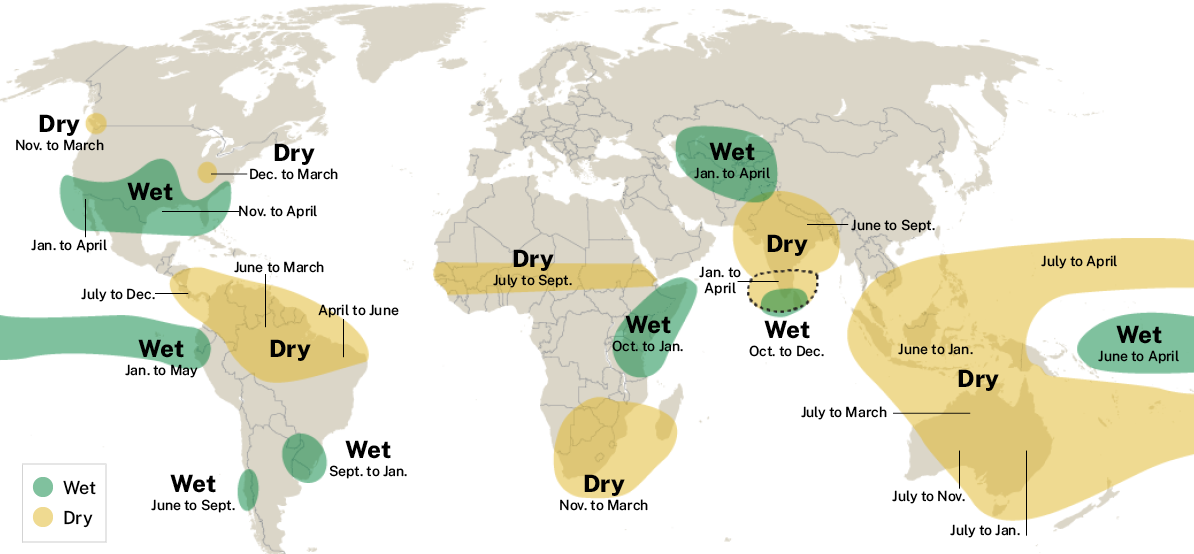
El Niño is the warm phase of the El Niño-Southern Oscillation (ENSO), which also includes a neutral phase and a cold phase know as La Niña. (International Research Institute for Climate and Society, Public Domain)
International organizations are focused on regions already in crisis. Drought looms over the Sahel, Southern Africa, and Central America’s Dry Corridor. The last El Niño plunged eight million people in Southern Africa into “food insecurity.” That’s the technical term for gnawing hunger, the worrying threat of it, or both. The El Niño before that left 3.5 million people in the Dry Corridor hungry or insecure.
But what about the world’s most productive grain belts? El Niño’s effects on them aren’t negative always and everywhere. They typically increase production in the U.S. Midwest, the world’s top corn-producing region. For the most productive grain-producing region on Earth, the North China Plain, El Niño is a mixed bag.
But South Asia’s immense grain belt, the Indo-Gangetic Plain, is already experiencing rainfall deficits. Vietnam’s major rice-producing region, the Mekong Delta, has been hit by prolonged heatwaves and below-average rainfall associated with previous El Niño events and is bracing for another difficult season. Australia’s wheat belts are in for a drier-than-usual season. The list continues, with lower grain harvests headed for Indonesia and Southern Brazil.
The concerns don’t stop with harvests and hunger. The global economy is at stake. Stores of surplus grain will insulate wealthy nations from “Super” El Niño’s worst, at least for some period of time (and unless conflict renders them inaccessible). But El Niño is getting more extreme; “Super” could become the norm. This will amplify the agricultural challenges that climate change already creates. It’s another reminder that we’ll have to reckon, sooner rather than later, with limits to growth.
Grain Belts: An Overview
Why the focus on grain? Fisheries are particularly vulnerable to El Niño events, and surely other crops will be impacted by this “Super” El Niño as much as grains.
For better or worse, rice, wheat, and maize constitute almost half of human caloric intake. Consumption of animal products is increasing, but this requires even more grain production, for livestock feed. What’s more, grains are better suited for long-term storage than vegetables or fruits, for example. This makes them foundational for stable economies.
The Indo-Gangetic Plain
The Indo-Gangetic Plain (IGP) stretches 2,400 kilometers from eastern Pakistan, across the north of India, and encompasses all of Bangladesh. Several major rivers converge here, enriching the soil with regular flooding and supporting one of the world’s densest populations. The region produces around 80 million metric tons of wheat a year, making India the world’s second-largest wheat producer. The IGP also produces much of the rice consumed domestically, contributing to India’s status as the largest producer and exporter of rice.
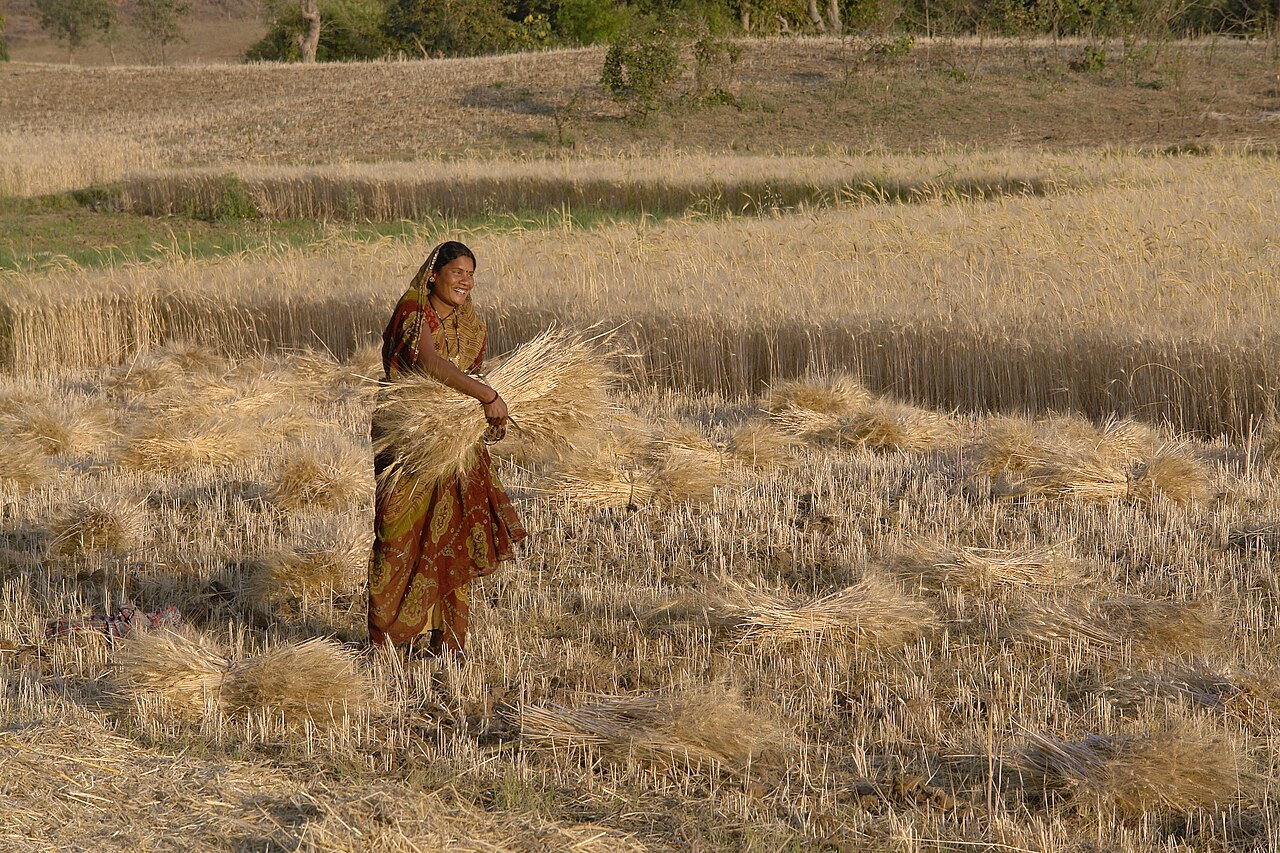
A farmer harvests wheat in northern India. (Yann Forget, CC-BY-SA)
Estimates of the number of farmers in India vary wildly, averaging around 90 million. At least half reside in the IGP. Grain production here is labor intensive; millions of smallholder farmers rely heavily on the manual labor of themselves and their extended families.
Even without El Niño, nutrient and groundwater depletion threaten agriculture in the IGP. Due partly to this, the region doesn’t support as high of a yield as some other major grain belts. Compared to global yields, IGP wheat harvests per hectare are similar, while rice yields are slightly lower. But in terms of sheer production and number of people fed, the IGP is globally critical.
India’s grain exports peaked in 2022 at 8 and 35 million metric tons of wheat and rice, respectively. However, in the wake of the grain shocks from Russia’s invasion of Ukraine, India banned wheat exports. In May of this year, the government announced it would allow traders to export five million metric tons.
The Mekong Delta
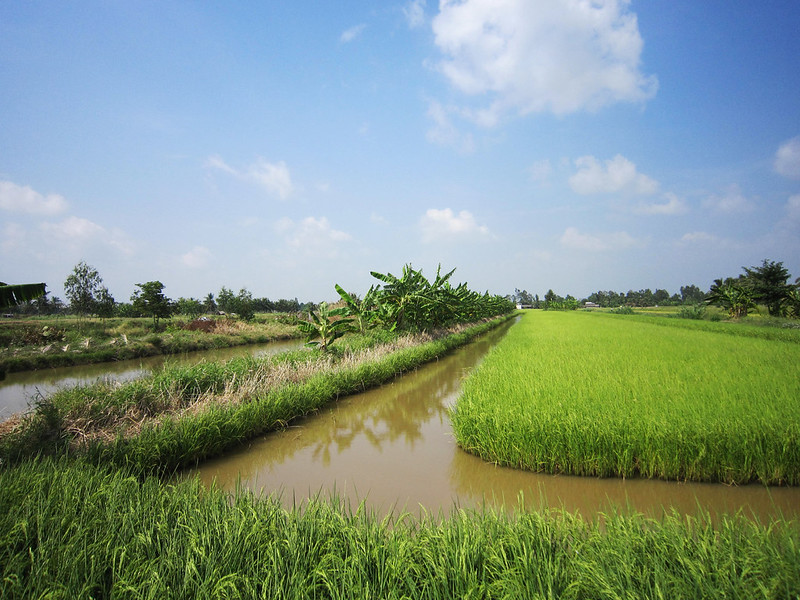
Rice and shrimp aquaculture in Vietnam’s Soc Trang province in the Mekong Delta. (Dr. Nhuong Tran, CC BY-NC-SA 2.0)
Next, let’s go to southern Vietnam, where the Mekong River branches into a vast delta of smaller channels and wetlands. Extending into Cambodia, the Mekong Delta covers around 55,000 square kilometers. Explosive population growth has driven intensive agricultural production in the region, mainly of rice and aquaculture products such as pangasius and shrimp.
The Mekong Delta produces less grain than the IGP—22 million metric tons of rice per year—but it is also smaller. It yields almost 50% more rice per hectare. The region also yields more rice per farmer than the IGP, due in part to mechanization. But its labor productivity is still low compared to the fully industrialized, “factory farm” grain belts, with around 1.5 million small-scale rice producers.
Rice yields in the Mekong Delta have plateaued and are unlikely to last, as erosion, saltwater intrusion, and pollution pose serious threats. Not to mention stronger El Niño events.
This spells trouble for Vietnam, Southeast Asia, and the world. The Mekong Delta produces the vast majority of Vietnam’s rice exports, and Vietnam is the world’s third-largest rice exporter. The top importers are other countries in the region, but Vietnam also exports rice to Africa—notably, around 350 million dollars’ worth to Cote d’Ivoire annually.
Australia
The vastness of Australia is not all Outback. Southern Australia is home to three agricultural regions that enable the country to produce over 34 million metric tons of wheat per year. Still, despite massive investments in agricultural innovation, Australia’s wheat production per hectare is relatively low. There’s only so much you can do on Earth’s driest inhabited continent.
But technology use has made Australia’s labor productivity—distinct from yield, which is a measure of land productivity—far higher than in the IGP or the Mekong Delta. It’s no coincidence that Australia’s GDP per capita is almost five times higher than India’s or Vietnam’s. The industrialization of its agriculture sector has freed up labor for other sectors. Indeed, though agriculture accounts for only two percent of Australia’s GDP, the sector’s surpluses have enabled the development of services, Australia’s biggest money maker.
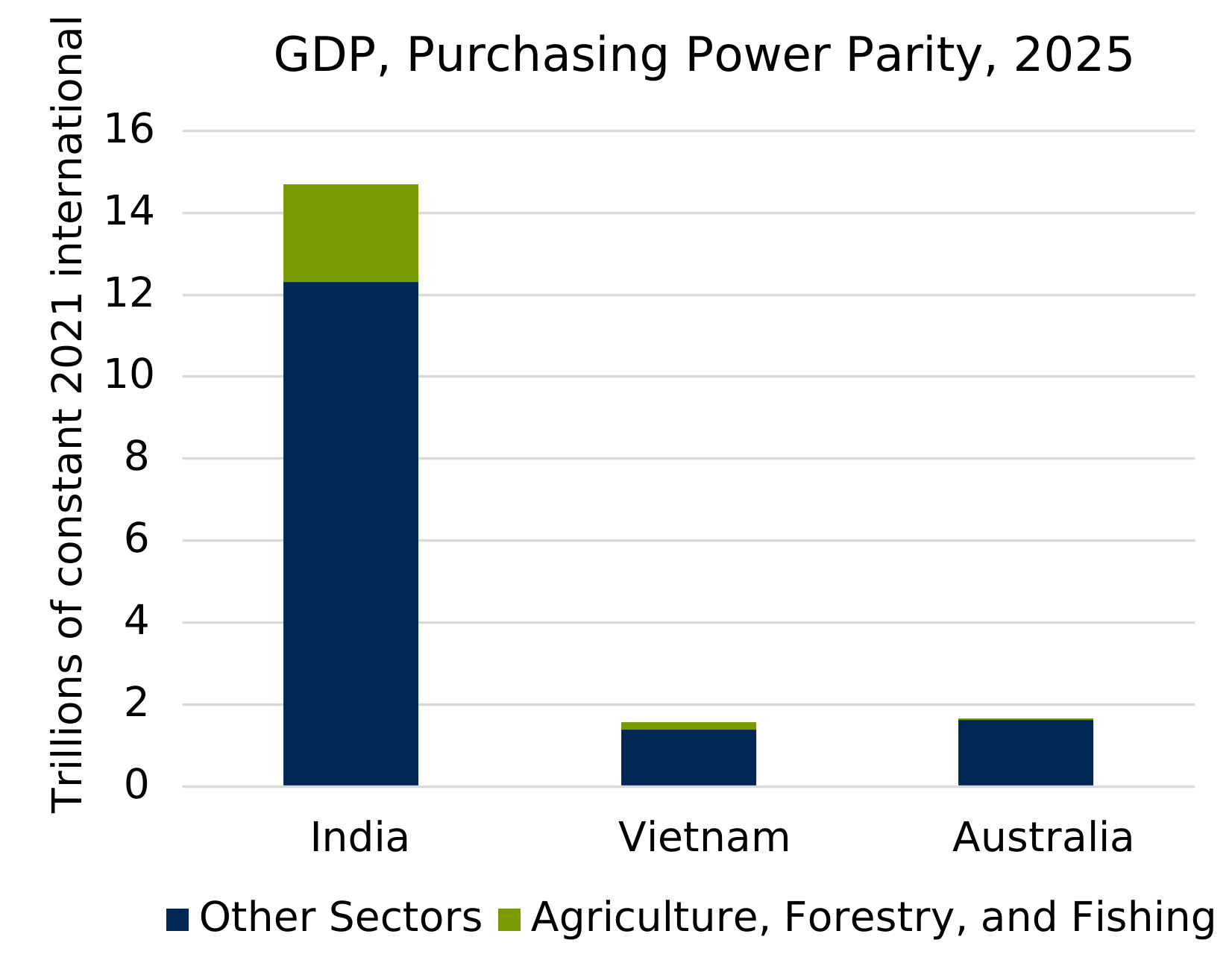
High agricultural labor productivity has freed up Australian workers for other sectors, enabling one of the biggest economies per capita. (data from World Development Indicators)
And there’s plenty to go around. Australia exports the vast majority of its wheat, making it the third largest exporter. Fast-growing China is the number one buyer of these exports by far. Big economies rely on a big agricultural base.
But Australia’s high labor productivity can’t be sustained beyond ecological limits. In a +2°C warming scenario, the country would need an estimated four percent increase in its agricultural workforce. But the labor force is moving in the opposite direction. The number of agricultural workers has declined steadily since 2020, despite the fact that Australia’s population growth rate spiked at the beginning of the decade. Most of the country’s rural youth leave agriculture and don’t turn back.
Declining profitability may be a driver of this sectoral migration. Climate change has already reduced Australian farm profits by a quarter, on average. And more intense El Niño events are coming to take their toll.
El Niño Incoming
Though nothing about El Niño forecasting is certain, this weather phenomenon has negatively impacted the IGP, the Mekong Delta, and Australia in the past. And there’s reason to believe the impacts will be amplified for this year’s “Super” El Niño.
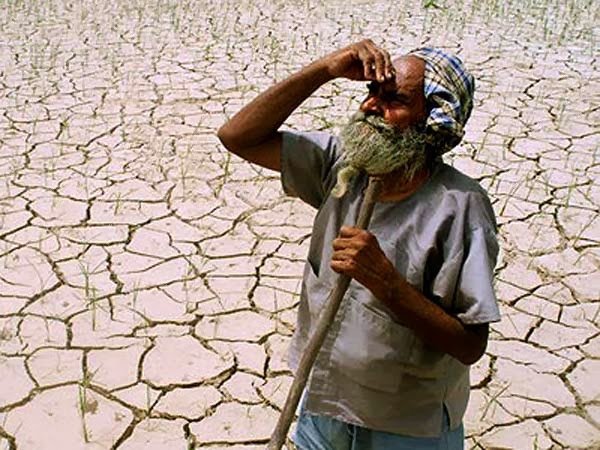
In the Indus Plain, part of the Indo-Gangetic Plain, humans are depleting upwards of 25 kilometers cubed of water per year. (Ranjith, CC BY-SA 4.0)
The IGP is so vast that, historically, El Niño’s crop impacts have varied across the region, including wheat-production increases in some parts. The main culprit of overall production decreases is drought. India relies on summer monsoons, from June to September, for 70–90 percent of its rainfall. No two monsoon seasons are alike, making it difficult to isolate El Niño’s effects.
But this year’s summer monsoon is shaping up to be the weakest in nearly two decades. A 35 percent rainfall deficit in June caused farmers to plant rice later than usual. Below-average rainfall in August and September has hampered the critical rice-development stages of pod formation and grain filling. And when farmers plant wheat in October, the soil moisture will be lower than optimum.
In the Mekong Delta, past El Niños have caused prolonged heatwaves, below-average rainfall, and saltwater intrusion. This year, these weather anomalies threaten 350,000 hectares of rice. Vietnam’s Plant Production and Protection Department issued a statement that at-risk farmers should reduce their acreage of autumn-winter rice, planted June–August, or forego planting altogether. Presumably, many farmers would need to find other work to supplement their income.
In Australia, El Niño is arriving on the heels of higher-than-usual rainfall. Farmers have scrambled to take advantage of the extra water, planting wheat later than usual. But even with the increased production from May rains, dry El Niño conditions are expected to cut this year’s wheat harvest by around nine million metric tons. That’s a 25 percent drop from last year.
This El Niño may positively affect some of the world’s major grain belts. But it’s highly unlikely that any production gains will outweigh the losses. Large quantities of food at the “trophic base” of the global economy are at stake this year and next.
Of course, the world has even larger quantities of food in storage—over 740 million metric tons of maize, wheat, and rice. Because of this, impacts of El Niño on global GDP would likely lag while surpluses are liquidated, and could be mitigated by agricultural rebounds in subsequent years. But how many “Super” El Niño events—at what frequency and severity—can we take before the global GDP meter starts rolling in reverse?
El Niño and Climate Change
Climate attribution is fraught with uncertainty, but one thing is not: El Niño is getting more intense. Weather associated with El Niño is getting more extreme, observable especially in terms of temperature. El Niño events contributed to record-breaking global temperatures in 1998, 2016, and 2024.
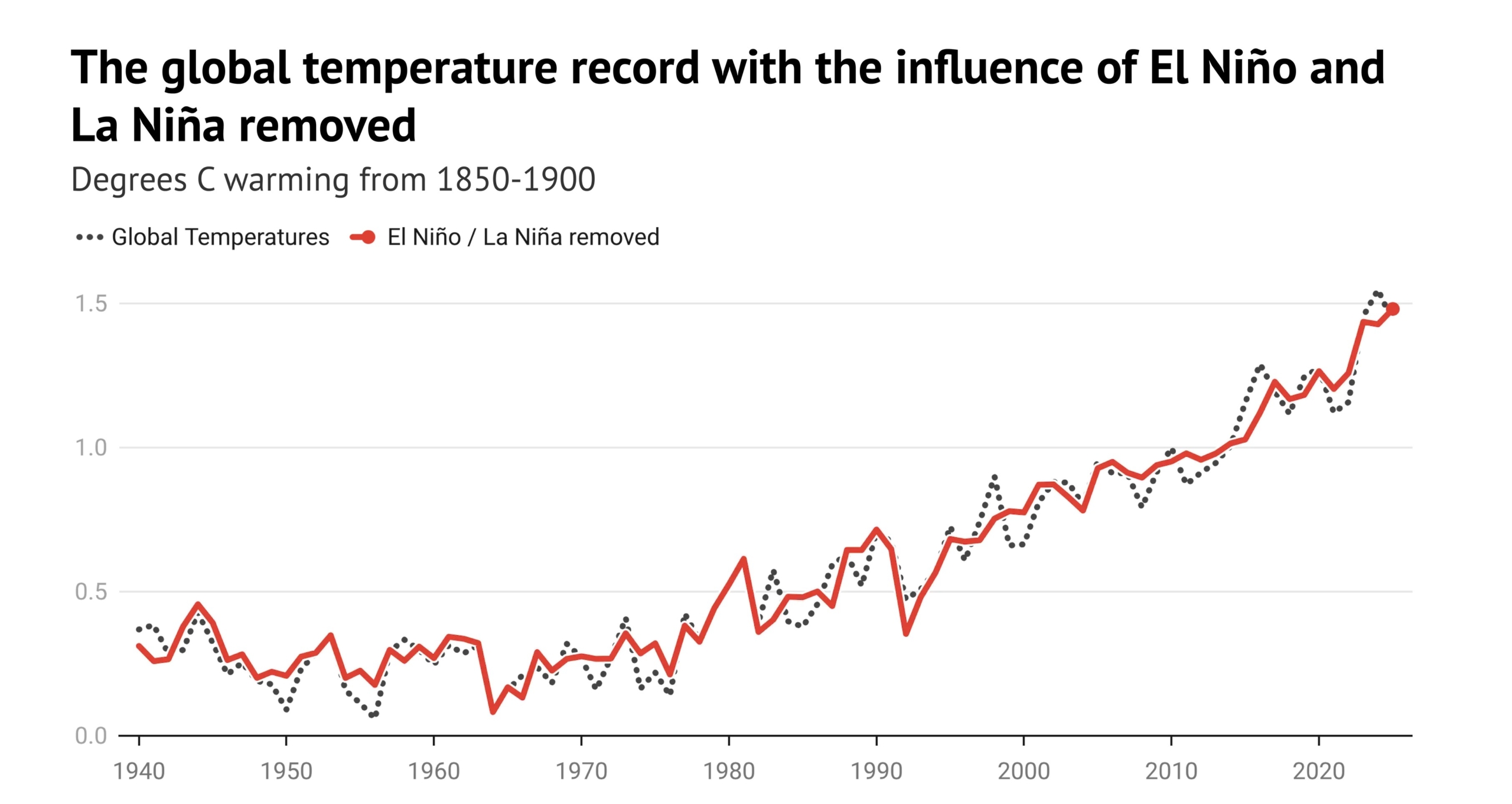
El Niño and La Niña can cause more severe temperature peaks and troughs, but, ultimately, economic activity is the key driver behind global warming. (Carbon Brief, CC BY-NC-ND 4.0)
A team of scientists used coral skeletons to estimate El Niño intensity over the last one thousand years. They concluded that the intensification of El Niño in recent decades cannot be explained by natural variation. Their findings indicate that human-caused climate change “supercharges” El Niño, with the developing Godzilla the latest example.
Climate change is also making El Niño less predictable. A region prone to drought during El Niño may experience a flash flood in the midst of that drought. This can be even more devastating to crops than a steady lack of water.
Limits to “Warranted” Money
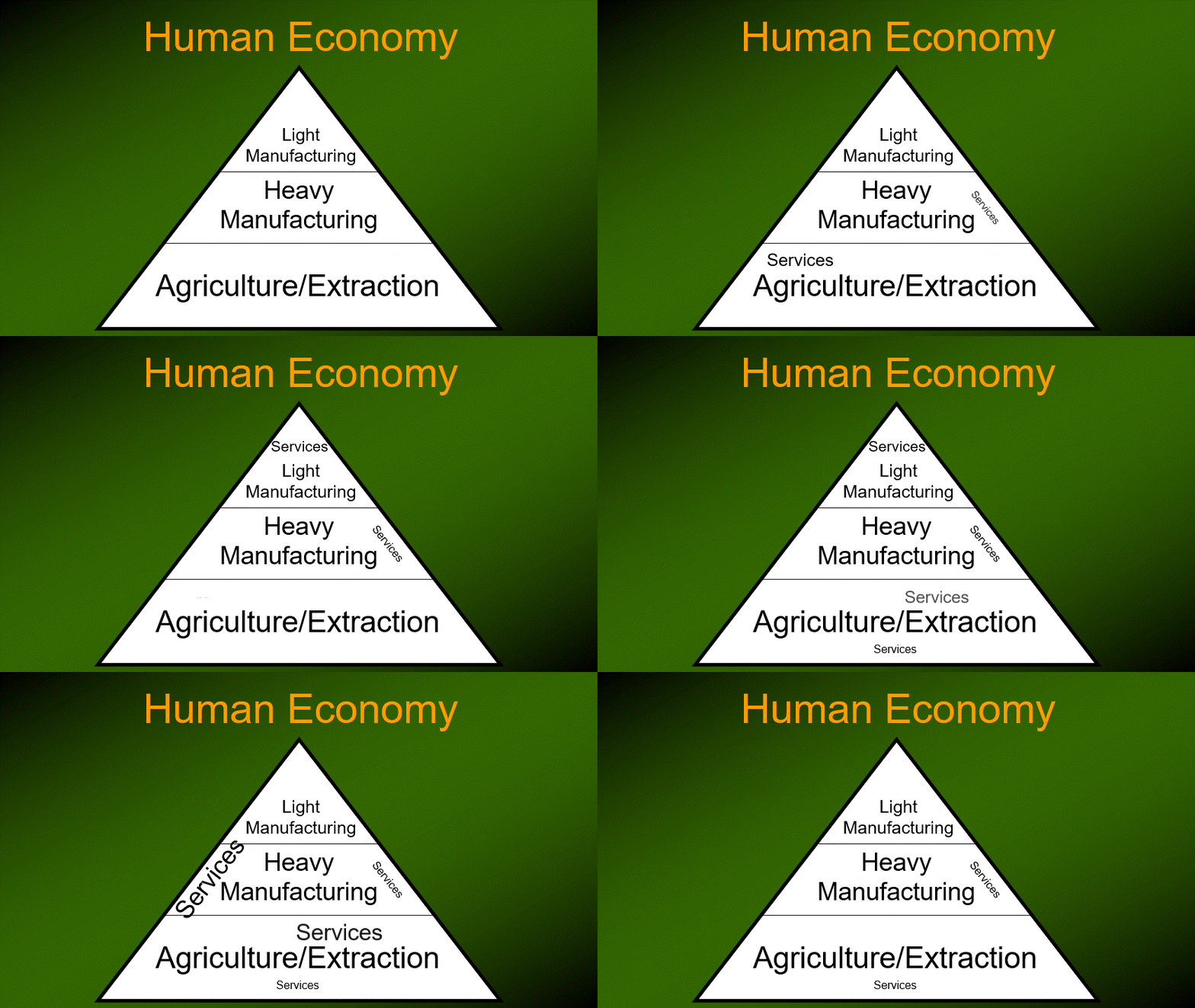
The economy’s trophic levels consist of agricultural and extractive sectors (producers), heavy manufacturing (primary consumers), and light manufacturing (secondary consumers). Services are really “gervices” and inextricable from goods and their trophic structure.
The moral of the story is that food security is at greater risk the further we hurdle past planetary boundaries. The global economy depends on food security; it’s built upon a base of agricultural extraction, like a pyramid. And according to the trophic theory of money, the number of mouths fed per farmer determines how many workers are available for other sectors and, in turn, how big the economy can grow.
In terms more relevant to economists, policy makers, investors, and financial journalists, food surplus ultimately determines the “warranted money supply,” or the amount of real (non-inflated) money availed for circulation. And when it comes to food surplus, grain harvests take—or make—most of the cake.
The warranted money supply arises not only from this season’s harvest, waxing and waning among the major grain belts in the North and South hemispheres. Reserves from prior seasons provide a nutritional and monetary buffer for bad harvests. But global wheat storage amounts to less than half the wheat produced each year, while corn storage is equivalent to around 30 percent of annual production. The situation for rice, which doesn’t keep as long, is more dire: Reserves amount to about five percent of annual production.
In other words, our stores wouldn’t last long if environmental degradation or conflict ground production to a halt. When Russia’s invasion of Ukraine disrupted production in the important breadbasket, experts estimated the world had ten weeks of wheat supplies stored. And unequal distribution of grain reserves—over half of which are held by China—makes this failsafe vulnerable to geopolitical tension.
Our dependence on food is a core principle of ecology that the governments and economists of “developed” countries tend to lose sight of. We are animals embedded in ecosystems, and no manner of information economy or artificial intelligence can change that.
No monetary policy can change it, either. It doesn’t matter what our central banks do to “stimulate” the economy, in the traditional sense of lowering interest rates or the more outlandishly inflationary sense of “quantitative easing.” Without the harvests and labor productivity to match, any such stimuli are bound to cause inflation, adding “first-world” strain to the misery of hunger suffered in regions lacking surplus.
If “Super” El Niños, climate change, and the myriad other manifestations of ecological overshoot demand a smaller global economy, smaller it shall be. Mother Nature bats last. Shouldn’t we be on her team?
 Alix Underwood is assistant director at CASSE.





Excellent briefing, Alix.
AI & I:
The convergence of an accelerating Super El Niño cycle, AMOC instability, and China’s strategic hoarding of over 53% of global grain reserves exposes North America’s food architecture to existential risk. The United States, Canada, and Mexico operate on hyper-efficient but dangerously brittle “just-in-time” private supply chains with minimal public stock buffers. Under compound climate anomalies, this lack of physical reserves leaves all three nations vulnerable to severe agricultural contraction, rapid food price inflation, and acute livestock feed-vs.-human food competition.
Establishing a Trilateral Strategic Plant-Based Reserve across the USMCA corridor represents the most pragmatic post-growth response to secure continental carrying capacity. Rather than issuing reactionary bailouts that rebuild vulnerable, high-emissions feedlot systems, a unified reserve pools high-latitude Canadian cereals, mid-latitude U.S. processing power, and Mexican legume diversity into a shared public trust. Storing shelf-stable pulses, oats, and human-direct grains maximizes caloric and storage efficiency while driving necessary land-sparing. This provides an equitable food safety net across North America without expanding ecological overshoot.
For immediate risk reduction, triggering a Trilateral Biofuel-to-Food “Circuit Breaker” must be the first legislative priority. Suspending Renewable Fuel Standard blending mandates during severe crop shocks instantly redirects roughly 40% of U.S. corn acreage and massive soybean volumes from fuel tanks directly into human and animal food channels. This acts as an immediate “synthetic reserve,” unlocking billions of bushels of grain overnight without requiring new taxpayer-funded storage infrastructure. Coupling this circuit breaker with expanded specialty crop insurance parity and capital grants for regional grain processing provides the necessary structural bridge toward long-term biophysical security.
This is an excellent idea.
Overall I think the concept of mutual aid at every level of human civilization is going to be important to get through this century.
Thanks, Cole. And agreed on the importance of mutual aid.
Here is some more Gemini grist:
The execution of a Renewable Fuel Standard (RFS) waiver or “circuit breaker” is time-sensitive to the annual agricultural and regulatory calendar. To mitigate the worst impacts of the Super El Niño on North American and global food security, the optimal window for the White House to direct EPA Administrator Lee Zeldin to trigger the waiver is between October and December 2026, prior to the spring planting season. Agricultural markets operate on forward contracts. Announcing a temporary reduction or suspension of Renewable Volume Obligations (RVOs) late in the year signals to Midwest corn and soy growers that grain demand will shift from ethanol and biodiesel toward direct human food and livestock feed. As drought conditions deteriorate under a Super El Niño, livestock ranchers face soaring feed costs. Triggering the circuit breaker late in the year suppresses grain price spikes before winter, preventing panic-driven herd liquidations.
Under the Clean Air Act, the EPA Administrator holds statutory authority to grant partial or full waivers based on “severe economic or environmental harm.” Rather than instantly wiping out the entire refining sector, Administrator Zeldin can depress the brake incrementally—for example, waiving advanced biofuel mandates first, reducing corn-ethanol blending requirements by 50% for the upcoming crop year, and keeping a statutory floor for octane requirements. This calibrated approach provides price stability for grain consumers while giving agricultural refiners and logistics networks time to adapt without triggering localized banking shocks across the Corn Belt.
Using a temporary, calibrated RFS waiver during an emergency buys essential operational time for a future Congress to enact a structural overhaul of stranded U.S. biorefinery capital.
Maybe someone on Trump’s team is listening. The US Senate race in Iowa is currently a toss-up.