Introducing the Sustainable Capital Markets Act
by David Shreve
U.S. capital markets—what we often call “Wall Street”—allegedly supply one critical economic function. They provide investment capital to those who need it and are best prepared to use it. A finance veteran might say the bigger and freer Wall Street is, the better. More capital from the nation’s investment banks means bigger ventures, greater marketplace competition, and increased productivity.
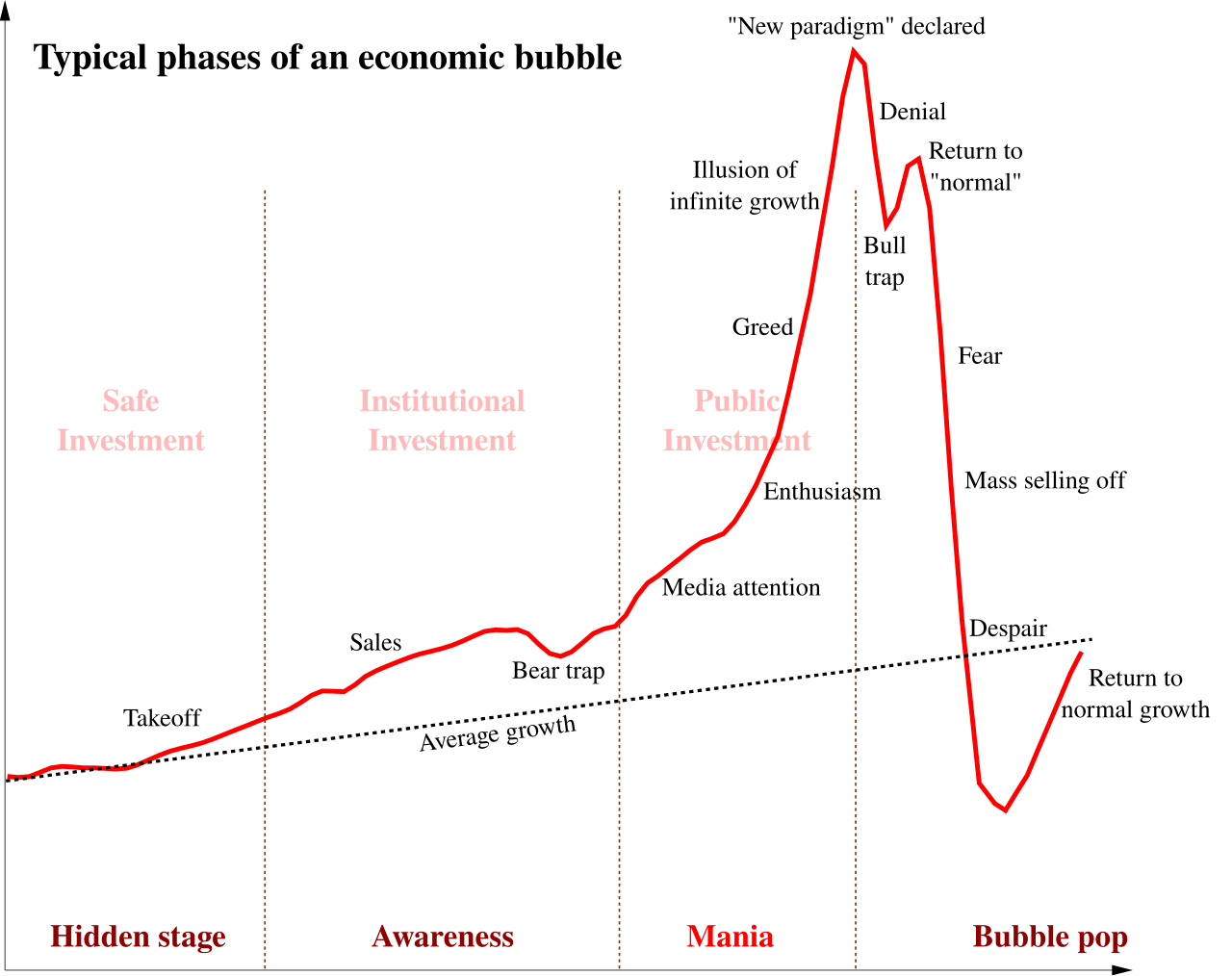
“Speculators may do no harm as bubbles on the steady stream of enterprise. But the position is serious when enterprise becomes the bubble on a whirlpool of speculation.” — John Maynard Keynes. (Gandie, CC BY-SA 4.0)
But bigger and more productive isn’t always good for people or planet. As Franklin Roosevelt noted when he signed the 1933 Securities Act, “…the merchandising of securities is really traffic in the economic and social welfare of our people.” Knee-deep in the Wall Street of the mythical “roaring twenties,” FDR understood the nexus between investment banking and industrial-age productivity. But he also had a fine sense of Wall Street’s corruption, its role in generating historic levels of inequality, and its need for robust regulatory oversight.
U.S. capital markets are powerful economic forces. Though numbers of publicly listed companies and initial public offerings have declined over the last thirty years, their total value has continued to increase. This reflects intense market concentration and the American affinity for runaway investment bubbles.
An important question hovers above it all: Do U.S. capital markets drive an unending search for growth that Earth cannot sustain?
Asset Valuation Gone Awry
Prior to the 1930s, investors couldn’t count on honest appraisals of company performance. Without good information for long-term investment decisions, many investors simply speculated. They bought and sold assets quickly for capital gains, creating investment bubbles that resulted in the infamous stock-market crash of 1929. Wall Street imperiled the U.S. economy just as often as it underwrote innovation and productivity.
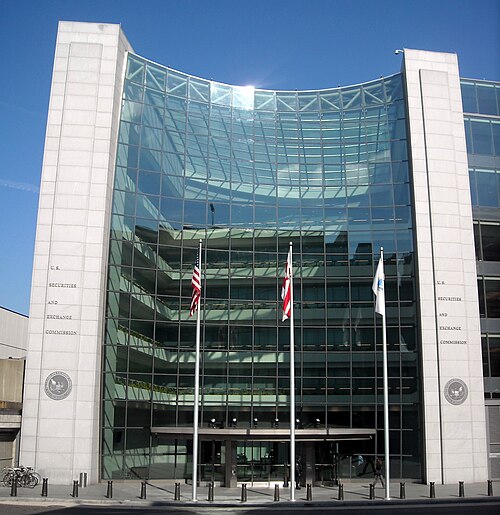
Established in 1934, the U.S. Securities and Exchange Commission regulates American capital markets. (APK, CC BY-SA 3.0)
The Securities and Exchange Commission (SEC), launched by FDR in the 1930s, was a response to this immense fraud and dysfunction. Its reporting requirements made it difficult for corporations to fudge their numbers when promoting the sale of their stocks or bonds.
The SEC has remained fairly effective at ferreting out bad asset information. But as Wall Street has evolved—perfecting new, opaque investment instruments and popularizing the efficient market hypothesis—regulation must also evolve.
In the wake of the dot com and housing bubbles, and with many close observers warning of an AI bubble, it’s time to reinvigorate the SEC. Without significant reform, efficient capital allocation will continue to give way to inequality, fraud, and a planet-killing focus on perpetual capital gains.
Liability and Local Bonds
Mindful that there’s a healthy baby somewhere in this enormous tub of murky bathwater, what should we fix? A good place to start is liability. Prior to 1970, all prominent Wall Street firms were partnerships. This meant that firm owners and managers assumed much of the risk inherent to their investments. Alongside robust SEC regulation, this liability kept investment banks’ worst tendencies in check.
The tides turned in 1970, when the first investment bank sold ownership shares to public investors. Offloading liability onto shareholders has freed investment banks for casino-like behavior. The resumption of a system where owners and managers are liable for investment decisions is long overdue.

In January 2007, President Bush celebrates the boom before the housing bust caused largely by bond-market misbehavior. (The White House)
Bond markets—a poorly understood segment of U.S. capital markets—also require significant reform and more SEC oversight. They are too costly, inefficient, and unreliable for most passive investors, who are staked to bonds by their pensions, 401K accounts, and mutual funds. One major issue is that private, for-profit agencies conduct the business of bond rating. Conflicts of interest regularly compromise the integrity and efficiency of bond rating, which regulators and institutional investors, such as pension funds, rely on to enforce rules and allocate capital.
Another major bond-market issue is the prevalence of specialized local-government bonds, which are often tied to special taxation zones or economic development projects. Compared with general-obligation bonds, which are tied to the full faith and credit of the issuing government, these specialized bonds carry higher interest rates. This directs taxpayer dollars from other public needs to the bank accounts of usually wealthy bond buyers.
Cutting Wall Street Down to Size
We’ve often heard that Wall Street isn’t the economy. Indeed, the corporate obsession with stock prices and capital gains tends to sacrifice real productivity and shared prosperity. Companies increasingly tie executive pay to stock performance. Startup founders and venture capitalists prioritize cashing out through a big sale or initial public offering. If stock-price gains and “successful exits” are the goals, quarterly growth matters more than building a sustainable business.
Reflecting these backward priorities, the net value of corporate stock issuance in a typical year amounts to zero. Publicly traded companies, eschewing real investment and hoping to goose their stock prices (and corresponding executive pay), quickly buy back more stock than they issue. To grow quickly—with little regard for long-term value—companies stifle competition, squeeze workers, and gouge customers.
Growth for its own sake should have no place in U.S. capital markets. Only real productivity, economies of scale, and actual returns on selective investments remain worthy goals in a steady state economy. And a steady state economy—built on respect for the planet, workers, consumers, and investors—entails optimally scaled capital markets.

J. P. Morgan as Wall Street’s bull, blowing bubbles for eager investors. (Puck, public domain)
Cutting Wall Street down to a sustainable size requires minimizing market dependance on economically and environmentally destructive investment bubbles. Key reforms to achieve this include taxing securities and international-currency trades, eliminating favorable capital-gains tax treatment, and limiting stock-exchange trading hours.
Finally, U.S. capital markets reform wouldn’t be complete without pension reform. Pre-1970s, public pension systems functioned well on a pay-as-you-go basis. Because current beneficiaries’ benefits were funded by current contributors, these systems didn’t rely on outsized stock-market gains.
Today, public and private pensions are treated like a liability to minimize or keep out of the budget, rather than another form of worker compensation. Companies and governments hand the reins to pension funds to invest for the biggest and fastest returns. Much like other investment institutions, these funds speculate, allocate resources poorly, and further inflate investment bubbles. The resulting ecological degradation undermines the very futures these pension funds are meant to secure.
The Act
A new feeder bill for the Steady State Economy Act, the Sustainable Capital Markets Act (SCMA), is a launchpad for capital-markets reform. The SCMA comprises fourteen sections. Sections 1–3 establish the bill’s short title, Congress’s findings and declarations, and definitions. One of the findings is that present U.S. financial sector management encourages speculation and rent-seeking at the expense of the efficient allocation of capital resources. The SCMA discourages or prohibits key elements of this behavior.
Section 4 is designed to reverse the transfer of investment risks from firm owners and managers to public shareholders. It requires partnership agreements that would make investment-bank “partners” personally liable for a large portion of potential firm losses. This would reward and maximize sustainable investment behavior.
Section 5 reverses an amendment to the Dodd-Frank Wall Street Reform and Consumer Protection Act of 2010. The amendment was signed into law in 2018 by President Trump. Dodd-Frank protected shareholders and U.S. taxpayers from bailouts of “too-big-to-fail” investment banks by applying “enhanced prudential standards” for banks with more than $50 billion in assets. The 2018 amendment loosened several of these standards and raised the threshold for their application to $250 billion. In addition to reversing this amendment, the SCMA transfers the performance of annual stress tests—one of the prudential standards—from investment banks to the federal Financial Stability Oversight Council.
Sections 6 and 7 focus on American bond markets. Section 6 phases out for-profit bond rating agencies. Section 7 requires that all municipal and state bonds be general-obligation securities, tied to the full faith and credit of the issuing government. It also eliminates the preferential tax treatment that municipal-bond income currently receives. Though this treatment theoretically makes state and local government borrowing less expensive, its primary benefits flow to wealthy investors, even while the federal debt balloons.
Sections 8 and 9 create two new transaction taxes, one for domestic securities trading and the second for international currency trading. For both, the object is to discourage volatile arbitrage in which insider trading, hot capital flows, and destabilizing transactions favor wasteful speculation over the exchange of essential products and services.
Section 10 introduces two changes to the U.S. tax code, to discourage the chase for capital gains. Current tax code treats capital gains more favorably than simple profits. This bias generates an artificial drive for growth, at the expense of value or need. The SCMA requires that capital gains and corporate dividends be taxed the same as “ordinary income.”
Section 11 is designed to discourage and ultimately eliminate cryptocurrency mining, which needlessly consumes vast amounts of energy. First, banks insured by the Federal Deposit Insurance Corporation are prohibited from dealing in cryptocurrency. Second, all cryptocurrency mining is prohibited. Third, a tax is applied to all cryptocurrency holdings owned by individuals or corporations.
To end the drive for 24/7 securities trading, section 12 mandates a limited (and traditional) six-and-one-half hour trading period based on U.S. Eastern Standard Time trading hours. This is meant to reorient trading to value rather than timing, to real investment rather than manipulation and speculation.
Section 13 requires public pension systems to return to a pay-as-you-go structure. Funded with a progressive tax system, this change would divorce pensions from speculation and antithetical corporate behavior. This section also compels private pension systems to maintain a reserve equal to 75 percent of their estimated thirty-year accrued liability. Section 13 also limits private pension fund investments to U.S. Treasury securities. This would lower returns, forcing companies to fund pensions mostly with current cash flow. This would also transform private pension funds into a significant source of public investment, which has a lighter ecological impact (especially pursuant to a Sustainable Budgets Act) than runaway speculation.
Finally, section 14 defines the penalties and enforcement for any violations of the cryptocurrency and trading-hours prohibitions in sections 11 and 12. As for the bill’s other provisions, each section specifies the entity—primarily the SEC or the IRS—responsible for determining how they will be enforced.
On a finite planet, where overshoot has become all too common, the status quo serves nobody’s interest. Inequality and instability prevail when our wellbeing and planet require the opposite. When our nation’s capital markets actively undermine a sustainable, equitable framework, they surely require change. The Sustainable Capital Markets Act is designed to make these markets do what we need them to do. Broad prosperity, not perpetual growth, is the principal goal.
 David Shreve is a Senior Economist at CASSE.







Have any law makers indicated their support for the proposed Sustainable Capital Markets Act? If so, which ones? For which parts? And for what reasons?
Good questions. Per Google AI:
“No, no lawmakers have indicated support for the Sustainable Capital Markets Act (SCMA). As of August 2026, it is still far too early in the process. The SCMA was only recently published as a theoretical model bill by CASSE Senior Economist David Shreve. It currently functions purely as an educational feeder bill designed to spark academic debate.”
“Lawmakers on the right are actively pushing in the opposite direction. Bills like Senator Tim Scott’s Empowering Main Street in America Act and the House-passed INVEST Act aim to lower regulatory burdens and expand capital formation to maximize GDP growth.”
“While there is a Congressional Sustainable Investment Caucus, mainstream climate-conscious Democrats focus heavily on ESG (Environmental, Social, and Governance) disclosures and climate-risk reporting via the SEC. They operate firmly within the green growth paradigm, trying to redirect market investments toward clean energy rather than capping or shrinking Wall Street.”
Indeed, even if we turn to the most progressive end of the spectrum, “There is virtually zero prospect of AOC taking up the steady-state mantle or framing the SSEA as a Green New Deal 2.0 for a 2028 presidential or Senate run. She is highly likely to lean heavily into the DSA platform and standard progressive populist economics to maximize her general appeal.”
“For the CASSE framework, the strategic horizon remains far beyond 2028. As long as major progressive leaders like AOC can still plausibly argue that technology and wealth taxes can deliver green growth, mainstream politics will ignore steady-state boundaries. The SSEA will likely remain an intellectual blueprint on the sidelines until an undeniable biophysical crisis forces a future generation of leaders to abandon the growth paradigm entirely.”
I hope AI is wrong about AOC and 2028 – it will be a terrible shame if her generation of leaders go down in history for greenwashing collapse. Let’s stop at Trump!
I hope that at least some of this reform will be adopted, if not today, at least some day.
All I can add is that when I have soaked in the discourse around capital markets for a few hours, it’s striking how *emotionally driven* it all is. It really does feel an awful lot like the sort of male energy one gets when a group of fellows has all had maybe two beers, not enough to be debilitated but enough to be boisterous, and goes off to a football game to either cheer or mope whatever happens.
That’s obviously less than ideal for allocating investment funding in the real economy, with real consequences.
Jonathan: Google AI’s ‘answer’ strikes me as a whole lot of unsolicited subjective opinion presumably tinged with gleanings from your Google profile / search history. In a phrase, ‘eff that noise’. If the answer is, as it seems to be, no, it’s dead in the water as far as congressional legislation is concerned, no more needs – or should – be said.
Shreve’s is a wonderful wish list that has zero chance of happening.
I enjoyed reading it nevertheless.
Well, MLS, you are quite direct! I appreciate that. Just stick to the spirit of the site’s anti-profanity request, ‘kay?
I can’t tell if you are mocking David’s work on the SCMA (“a wonderful wish list that has zero chance of happening”) or you are just a limits to growth sadist (“I enjoyed reading it nevertheless”), but maybe you would be so kind as to clarify why I should care more about your unsolicited opinion than what Google AI has to say in response to a good question from the comment board? Perhaps you are an expert in this area, and you will elevate us with an original answer. Fire away! I myself have a disability and I use medications and AI to help me reason through emotionally difficult “super-wicked” problems like humanity’s bittersweet transition to a post-growth economy. I trust that Alix, the moderator, will nudge me if I stray too far off course.
I don’t know enough about capital market regulation to offer much constructive criticism of Shreve’s SCMA work, in contrast to some other areas where I feel a little stronger. But the bill is logically solid according to Google AI, and I have faith in CASSE’s framework as the best solution that America has put on the table so far to solve the limits to growth problem. That means I expect the SCMA to be worthy of serious consideration in both the 120th Congress and in the 2028 campaign cycle. If the DSA can skyrocket to prominence, why can’t CASSE, which transcends the capitalist-socialist dichotomy? Why do you give the SCMA zero chance of ever happening, MLS?
In addition to criticism from the right, I expect the SCMA will take hits from degrowth eco-socialists, who are not in the majority at the DSA (yet), and also from thermodynamic pessimists who believe that passing a bill to restrict capital markets will not support the transition to a stable plateau, but will trigger a rapid systemic default and an uncontrolled economic collapse.
All pertinent grist for the mill. Back2U. Let’s reason together :)
Thanks, everyone, for weighing in with thoughtful comments. And, yes, as the prophet Isaiah reminds us (echoed by Jonathan here), “Come now, let us reason together.”
As much as I recommend more of a Luddite-like approach to AI–for its all-too-high slop-to-value ratio, and for its catastrophic environmental consequences (including its propensity for wasteful capital market “bubble” appreciation)–its response to Jonathan’s well framed question was fairly precise. Yes, by all means, this article was intended to be an “educational feeder bill designed to spark academic [and decidedly non-academic] debate.”
Calling it a “wish list” is not entirely inaccurate, but I prefer to use the metaphorical “North Star” instead. Politics is always to some extent a reflection of compromise and consensus, and economics is always “political economy,” but a viable consensus can never quite emerge without an idealized standard. One of the grandest and commonest mistakes made by politicians operating in a complex world and modern economy, is to begin their compromising from a point without an idealized anchor. The proverbial “half-a-loaf-of-bread” then materializes as nothing more than an inedible assortment of inert, unmixed grain, yeast, and water, more susceptible to spoilage and waste than it is likely to offer even the barest nutritional value.
Thank YOU, David, for your hard work putting the SCMA together, and for your thoughtful response to our comments.
I also appreciate CASSE accommodating AI use by a disabled person who recognizes the environmental tradeoffs and the importance of using AI – while we have it – to advance the transition to a steady-steady economy.
This said, here is Google AI with a little more bread-making feedback for us:
“Before a future Congress could seriously debate or implement the SCMA, the text would need to pass through a gauntlet of multidisciplinary experts.”
“Actuaries and pension fund managers must calculate the immediate fiscal fallout. If private pension funds are restricted to low-yield Treasuries, companies will be forced to fund retirements out of current cash flow. Experts must determine if corporate America has the cash reserves to survive this shift without instantly rendering millions of active workers’ retirement portfolios insolvent.”
“Corporate law professors and historians specializing in the SEC and the pre-1970 partnership banking models are vital. They can critique whether piercing the corporate veil to make Wall Street executives personally liable for firm losses would actually deter reckless speculation, or if it would simply push capital entirely offshore into unregulated, shadow-banking jurisdictions.”
“Ultimately, the SCMA functions beautifully as an academic proof-of-concept. For it to survive a congressional committee, constitutional law experts would need to evaluate the legality of its outright ban on cryptocurrency mining and possession (Section 11), while macroeconomists would need to model the precise velocity of the capital flight that would occur the moment such a bill was introduced on the House floor.”
Are these four reasonable SCMA stress tests, David, for a Member of the 120th House Committee on Financial Services to request? It would be great to hear at least 1 Dem challenge the growth goal in the HCFS hearing at 10 AM today.
A quick follow-up, David. Not one Committee Member questioned the growth premise during yesterday’s HCFS hearing titled “Strengthening the American Economy: Promoting Growth, Opportunity, and Prosperity.”
This morning, I prayed for the first time in a while, having fallen out of the habit recently. During my quiet prayer session, your comment came back to my mind, and it further sank in just how helpful it was to me that you mentioned both the prophet Isaiah and the importance of baking in whole loaves. While it may not have been your intent to elicit this affirmation from me, I am happy to say that I have deep faith in God and Science as an ultimate harmony. I see CASSE and the Church as two sides of the same coin. But this can get lost in the intellectual shuffle, especially if I frame the most likely path ahead as one of Democratic steady-state protest against a pro-growth Republican establishment. I know that respectful, authentic dialogue with Main Street Republicans and with conservative Protestant and Catholic theologians about the steady-state Creation Care message is important, too.
Taking all of this into account, it came to me forcefully in my prayer session that I hadn’t thanked you and CASSE deeply enough for the importance of your work before I jumped somewhat eco-anxiously into sharing my four-part, year-long stress test of the SCMA as Google AI might recommend it to a legislative staffer on the Hill. Your comment was truly deep and helpful. In the spirit of Herman Daly. Apologies and God bless :)
The diagnosis here is right. However…
Worth naming the mechanism underneath it directly. When a founder raises capital through equity, the growth imperative isn’t a byproduct of bad incentives, it’s inevitable. The instrument only pays an investor back if someone else eventually buys the position for more than they paid. There are exceptions, biotech and med tech have a natural buyer, an acquiring pharma company purchasing a de-risked asset. But for most companies raising equity, there is no natural buyer, so the growth narrative has to be manufactured and sustained indefinitely. It’s the condition the instrument creates.
Where I’d push back is on the mechanism for change. Bans and prohibitions force a shift, and where there’s force there’s resistance. The more durable path isn’t restricting the old instrument, it’s building fund structures that create real demand pull toward instruments other than equity, like revenue sharing vehicles. This allows capital to move voluntarily because the alternative is genuinely better suited to the business, not because the old path was made illegal or expensive. Most founders I speak to would rather not give up ownership of the company they built and just want an instrument that gives them runway. The financial service industry would resist this policy with every fiber in their being, which I’m sure you already know.
In the end, what’s more likely, regulating the current system or building an alternative that designs out the growth imperative from inception?
Paul,
Thanks for these incisive comments. Indeed, some of these concepts and concerns were grist for thought as I pieced together this model bill. Equity financing does imply inevitable growth, on the margin, and so, yes, such an outcome seems irresistible. But what matters, perhaps, just as much, is whether equities trading, in general–post-IPO and across-the-board–also generates an “inevitable” predilection for growth. I mulled over, for example, potential ways in which a changed rule or regulation might encourage the acceptance of stable profits (and dividends) over capital gains and mere enlargement or Empire-building. Policymakers in the 1960s, especially those on the Kennedy and Johnson Council of Economic Advisers, spent a lot of intellectual and political energy trying to teach the era’s corporate managers, for example, how to better share productivity gains with workers and consumers. They understood that, contrary to such an approach, the prevailing corporate managerial drive for steadily increased (rather than stable and persistent) profit and for what was then called “conglomeration,” actually undermined price stability, unsettled monetary and fiscal policy, and threatened general profit-making potential in the medium term. Sadly, one of these CEA economists, the great Gardner Ackley, once lamented that the whole effort was like “telling children not to put beans up their nostrils.” The search for better guidance, incentives, or regs continues…